September 7, 2026
Best Hiking & Wine Day Trips from Vienna to Vineyards
Active life, Culture, Flora, Guide, Hiking
Top attractions:
About Viennese Love for Wine
The most important thing to understand in this story is that Vienna is the only Capital in the world with vineyards under the prestigious protected status of origin. Without a doubt, that affects the culture, or rather vice versa. While Austria is clearly a beer country, Vienna and the surrounding lowlands prefer wine, with most of the smaller regions having their own specialty. For example, the specialty of Vienna is Gemischter Satz, which is the only wine in the Capital with DAC status, but more about that later. The point is that Viennese love wine, and whether it is sparkling wine, white, or even red, they are all intrinsic to the local culture.
The other thing that seems to be imprinted in the Viennese people, and Austrians in general, is their passion for the great outdoors. It is very common for the locals to spend their free time in nature, especially hiking in the Vienna mountains, but some people prefer a slightly different type of outdoors – wine hiking. As the name suggests, it combines two of the typical Viennese activities into one. I imagine this might sound like a very niche thing to do, but walking between wineries located in picturesque vineyards of the idyllic Austrian provinces is a very popular thing to do, especially at certain times of the year.
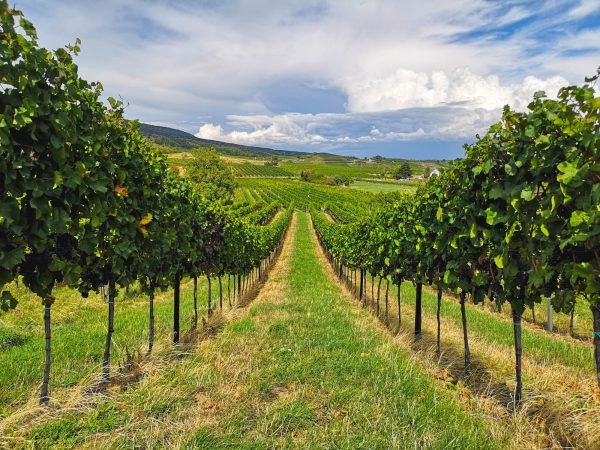
Beautiful vineyard hills in Thermeregion. Photo by Alis Monte [CC BY-SA 4.0], via Connecting Vienna
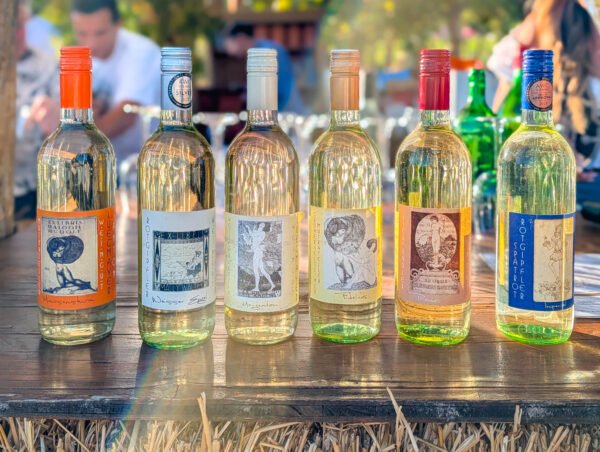
Wine palette at Anton Luegmayer. Photo by Alis Monte [CC BY-SA 4.0], via Connecting Vienna
Best Time to do Wine Hikes – Weinherbst (Wine Autumn)
At first glance, it is very likely that an outsider will not perceive Weinherbst in any meaningful way, but once one gets a grasp of it, it is hard to let go of it. First, we need some context. Many different cultures across the world have their view of the yearly cycle. Here in Northern Europe, it is often linked with wheat culture. For example, in Lithuania, it is possible to tell when to gather or plant the crop just from the Lithuanian names of certain months. Another popular culture in Europe comes from the South and it is none other than wine. Weinherbst is a period between August and October when most of the grapes are gathered to produce the next year’s wine and some seasonal drinks like Sturm or Jungen Wein. But that’s just a wiki-style description of this Viennese and Austrian festivity. One has to experience this firsthand to truly understand why Weinherbst is the best time to visit Vienna and the surrounding regions. The magic is real.

Weinherbst is often titled as the fifth season in Austria. Photo by Alis Monte [CC BY-SA 4.0], via Connecting Vienna
Just like a dawning spring brings the birds’ songs to the awakening forests and fields for some exceptional natural event about to occur, during Weinherbst people fill vineyards with their laughter and chatter with such a high spirit as if the hardships of winter were still miles away. The yellow leaves seem to compensate for the lack of sun, and fine wines warm the souls and bodies of vineyard visitors. For me, as a foreigner, Weinherbst always feels surreal – like a movie set. It doesn’t matter how many beautiful times you get to experience the magic of this period; it always feels like the first time. The thin line between hiking and tasting the best wines you can get makes the whole experience something of a utopian feeling. Although it seems to be natural to the locals. I can only wonder what I was doing my whole life while they were enjoying Weinherbst for ages, but it is never too late to start.
Weinherbst Details
- Duration: ~3 months (peak Aug–Oct)
- Period: August – October
- Seasonal pours: Sturm and Junger Wein appear as harvest starts
- Signature events: Genussmeile Thermenregion; Wiener Weinwandertag; local Heuriger / Ausgesteckt calendars
- Related guides: Genussmeile Thermenregion 2026 · Gumpoldskirchen Heuriger Calendar 2026
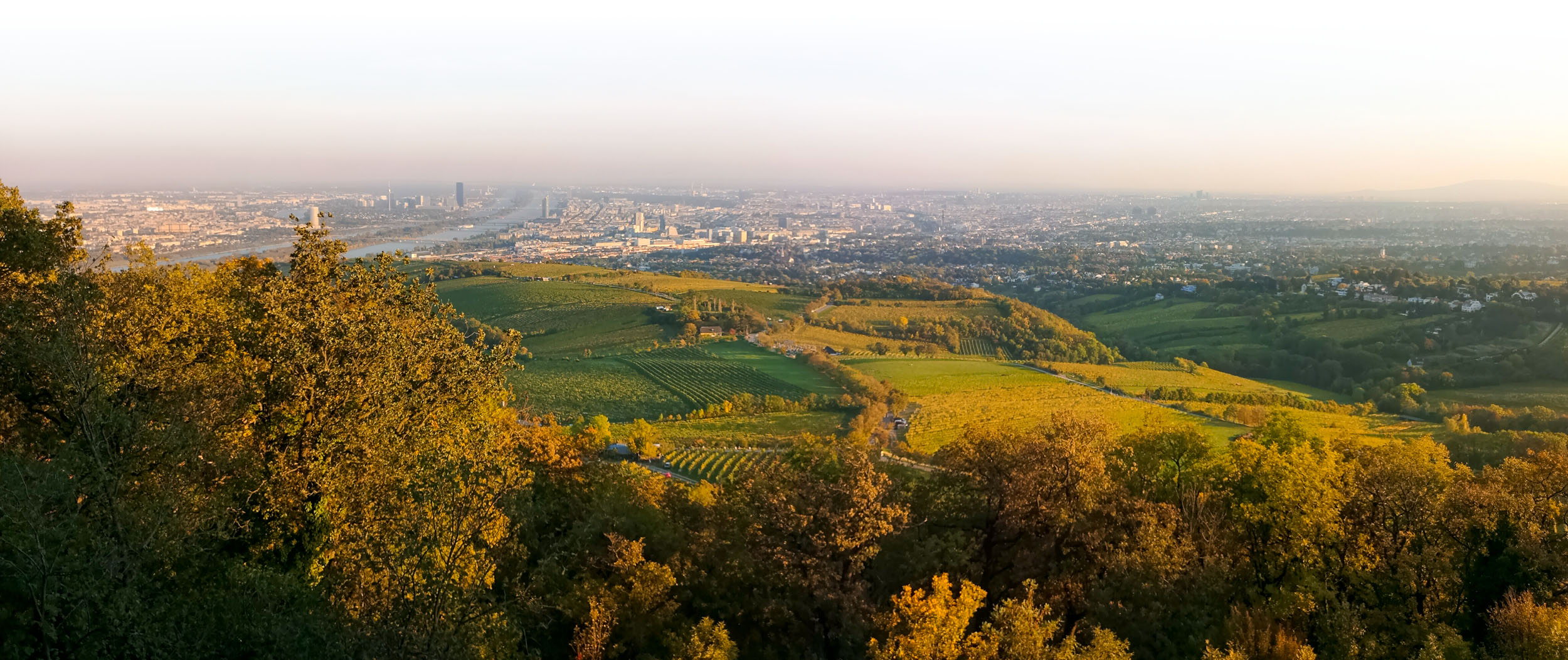
The panorama of Vienna vineyards from Kahlenberg. Photo by Alis Monte [CC BY-SA 4.0], via Connecting Vienna
Best Wine Regions for Hiking
The list includes only the regions around Vienna in Lower Austria and Burgenland. Undoubtedly, these states produce the best wines in the country, but Styria, for example, also has very strong viticulture. Of course, the quality of the local wines doesn’t necessarily have something to do with the quality of an area for hiking, but it is not always the case. As we surely know, the taste of a wine depends on the soil and climate; therefore, the wines produced from vines growing on infertile, rocky terrains will have the flavour of the landscape. It so happens that the most valued white wines in Austria are produced in exactly such terrain.
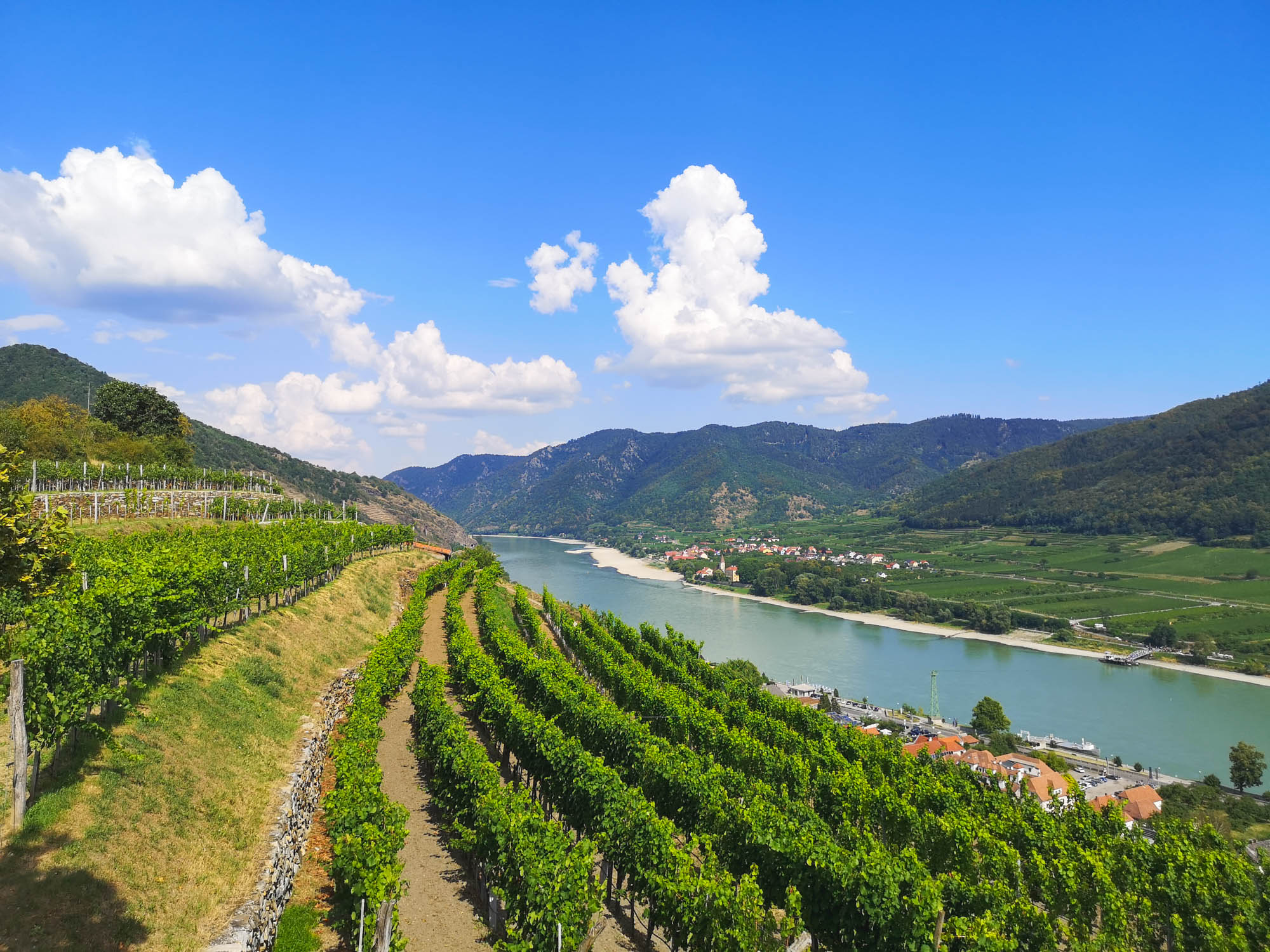
The tough terrain of Wachau is suitable only for vines and apricot. Photo by Alis Monte [CC BY-SA 4.0], via Connecting Vienna
The Wachau Valley
It is widely agreed in Austria that the best white wines in the country come from a relatively short stretch of about 30km / 18.5mi by the Danube River. This region is known as the Wachau Valley and is situated just about 90km / 56mi to the north of Vienna. Maybe because of its location, Wachau is among the most popular tourist destinations in Austria. If it doesn’t ring a bell for you, maybe Melk Abbey or Dürnstein does? Of course, tourists come here mainly for sightseeing, while the locals love Wachau for totally different reasons and try to avoid the crowds by going to different towns. Spitz and Weissenkirchen are the obvious choices but there are many more. The point that I’m getting to is that the Wachau Valley is simply breathtaking, and as we already know, it happens to produce the best white wines in Austria. It is just perfect for wine hiking, but if you are not a fan of that, cycling in Wachau is also a very popular option.
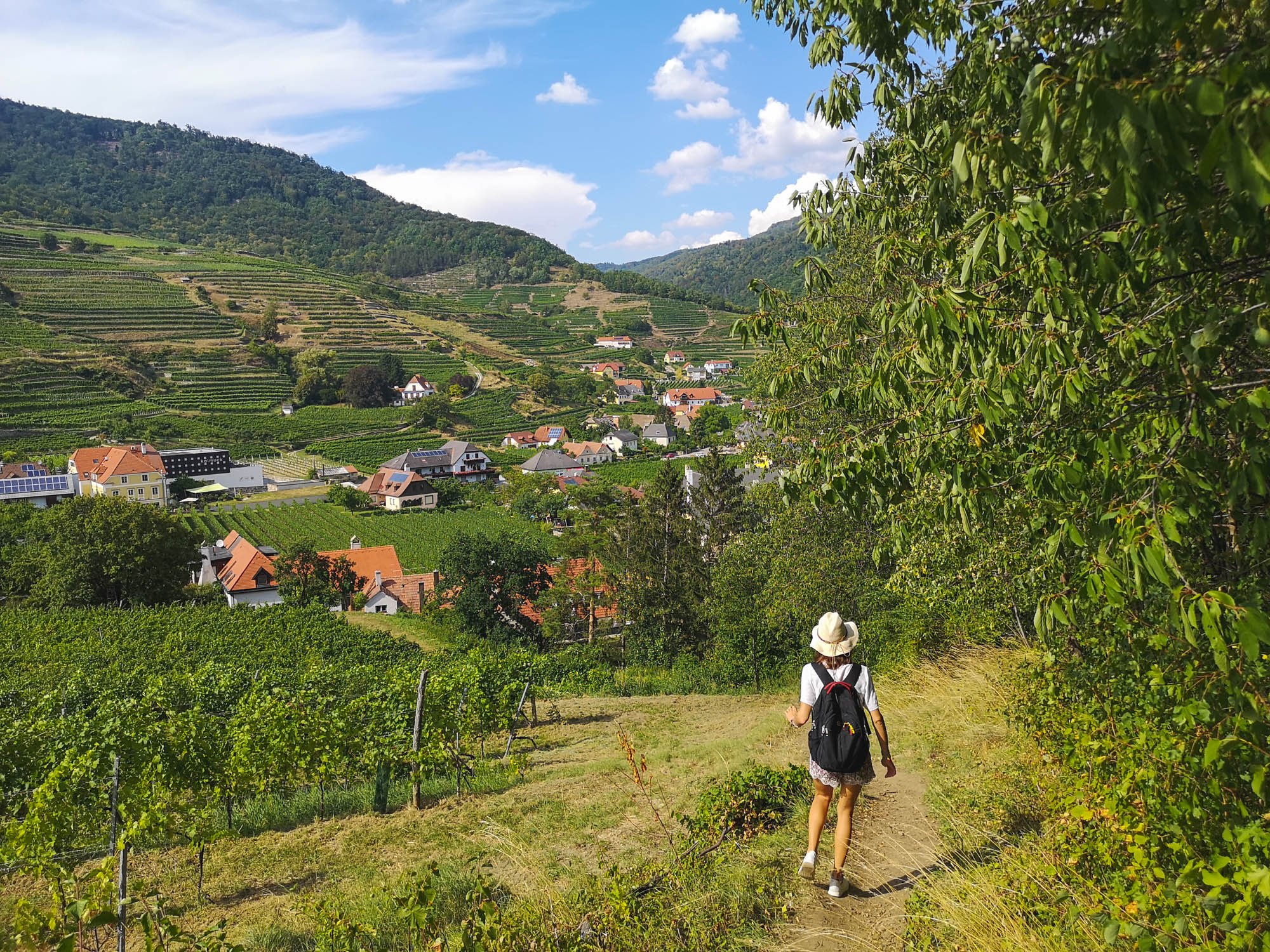
Every second spent in the Wachau Valley is a blessing. Photo by Alis Monte [CC BY-SA 4.0], via Connecting Vienna
Smaragd, Federspiel & Steinfeder
The Wachau Valley is the only region in Austria to use a non-standard wine classification system instead of DAC (Districtus Austriae Controllatus). The classification system includes 3 levels of local quality wines: Steinfeder, Federspiel, and Smaragd. While the last one is acknowledged to be the rarest and most sought-after of the three, different wineries specialize in different types of these wines. For me, personally, a good quality Wachau Federspiel together with Gumpoldskirchen Zierfandler are my two most favourite white wine varieties. These classifications have different and strict alcohol requirements, which are often paired with their location. Steinfeder wine is the lightest one (up to 11.5%) and is often found closest to the Danube River. The dry and mineral-rich Federspiel (11.5% – 12.5%) is grown in the fields of Wachau and is probably the most abundant and popular variety. Smaragd has to be above 12.5% and is often grown in the best locations, on the highest level of the vineyards, where vines get the most sun. Due to the geographical location, Wachau wines are relatively weak in alcohol, but they compensate with the aroma and taste.

There are so many reasons to love the Wachau Valley. Photo by Alis Monte [CC BY-SA 4.0], via Connecting Vienna
Wine Tips
- Best wines: Federspiel & Smaragd (Gruner Vetliner & Riesling)
- Good wines: Steinfeder (Gruner Vetliner & Riesling)
- Best hubs: Weissenkirchen, Spitz & Dürnstein
How to get to the Wachau Valley
- Train station: Krems Bahnhof
- Coordinates: 48.3922° N, 15.4674° E (Weissenkirchen)
- Distance from Vienna: ± 90km / 56mi
- Recommended route: Wien Spittelau – Krems (Rex Train), Krems – Wachau (Bus 715)
- Trip duration: ~1h20
- Recommended ticket: VOR Freizeitticket €19.90 (NÖ + Burgenland, Sat/Sun/holidays) · VOR Freizeitticket Plus €29.60 digital (includes Wien) — see vor.at (DE)
- Optional ÖBB: Einfach-Raus Ticket from €38 / 2 people (oebb.at)
- Best hiking trail: Spitz – Weissenkirchen
- Map: Wachau hikes

Wachau landscape is generally dominated by vineyards. Photo by Alis Monte [CC BY-SA 4.0], via Connecting Vienna
Thermeregion
I’m in a constant struggle to decide which Austrian wine I love the most. Thermeregion is usually the defending champion, and the Wachau Valley is a close second. As I mentioned, the white wines of the latter region is not that hard to compare, but Thermeregion houses the best Zierfandler & Rotgipfler wines in the world. As a matter of fact, these vines are barely cultivated elsewhere, which makes wine tasting in Thermeregion a unique experience.
I won’t lie, I come to the region mostly for wine and not for hiking opportunities, but that doesn’t mean you can’t do it. The region is situated between the Alps and the Vienna Lowlands, which has resulted in various natural thermal baths and the unique taste in the wines produced from these lands. This geographical position also means that there is a possibility to hike in the Prealps, which at this part is known as Wienerwald (eng Viennese forest). Catching some fresh air in this forest is always a good idea before getting a glass of wine, but vinophiles probably prefer to hike in the vineyards instead. It might not be as beautiful as the Wachau Valley or Vienna; nevertheless, Thermeregion is very popular for its own reasons.
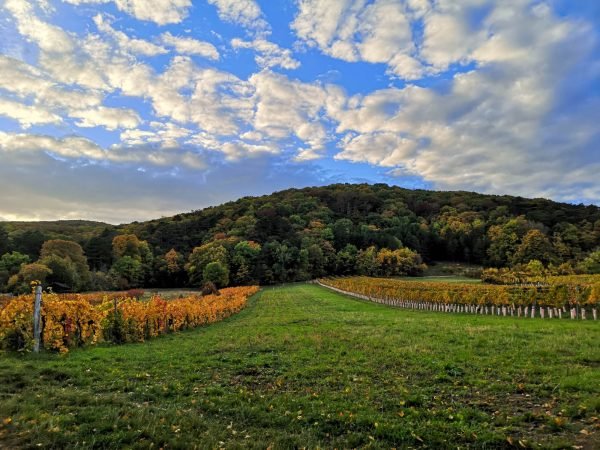
Thermeregion is not known for its hikes but it doesn’t mean there is nothing to see here. Photo by Alis Monte [CC BY-SA 4.0], via Connecting Vienna
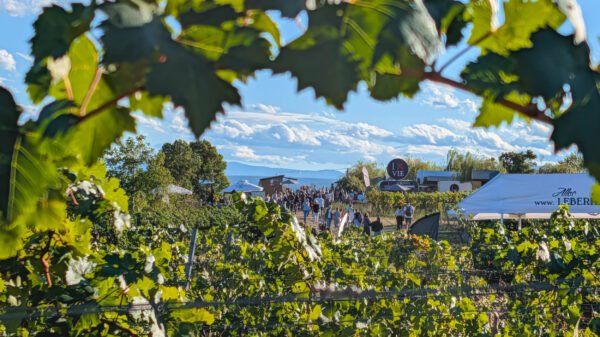
Genussmeile is the prime time of the wine autumn. Photo by Alis Monte [CC BY-SA 4.0], via Connecting Vienna
Genussmeile
Each year, the region turns itself into the self-proclaimed longest bar in the world. The winemakers gather to sell the local wines straight from their vineyards, starting from Bad Vöslau and going right up to Mödling. The bar stretches about 15 km / 9mi from start to end and many wine and outdoor enthusiasts gather to celebrate the event, which happens only twice, on the first two weekends of September in the middle of Weinherbst. The most popular stretch of the hike lies between Baden bei Wien and Gumpoldskirchen, but many people go even further, or at least, they plan. Naturally, after a few stops in the romantic vineyards, one might lose the will to hike further.
Of course, not everyone is up for hiking, but the organizers of Genussmeile are always prepared for that as well. If you happen to get too drunk to hike, or want to enjoy the spoils of vineyards without any workout, there is a Genussmeile shuttle from the main train stations to the vineyards. Don’t worry, there is no risk of getting stuck in the mud because the shuttle is pulled by a tractor!
Genussmeile Details (2026)
- Dates: 5–6 September & 12–13 September 2026
- Hours: Sat & Sun 12:00–19:30; free entry
- Abschnitte: A Bad Vöslau–Sooß–Baden (flat/family); B Baden–Pfaffstätten–Gumpoldskirchen (busiest); C Gumpoldskirchen–Thallern–Guntramsdorf–Mödling (scenic)
- Full guide: Genussmeile Thermenregion 2026
- Heuriger openings nearby: Gumpoldskirchen Heuriger Calendar 2026
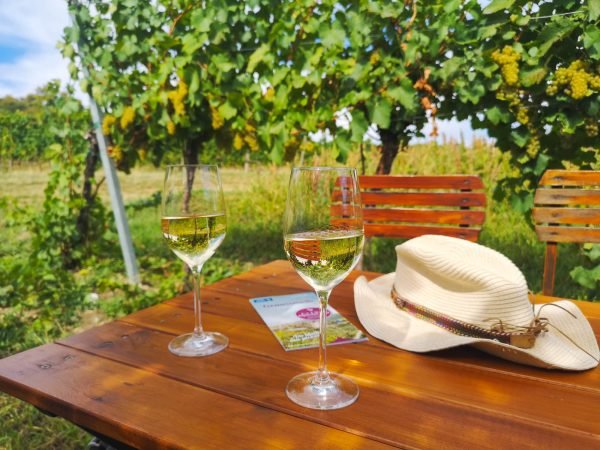
Nothing like a glass of cold Thermeregion wine after a hike. Photo by Alis Monte [CC BY-SA 4.0], via Connecting Vienna
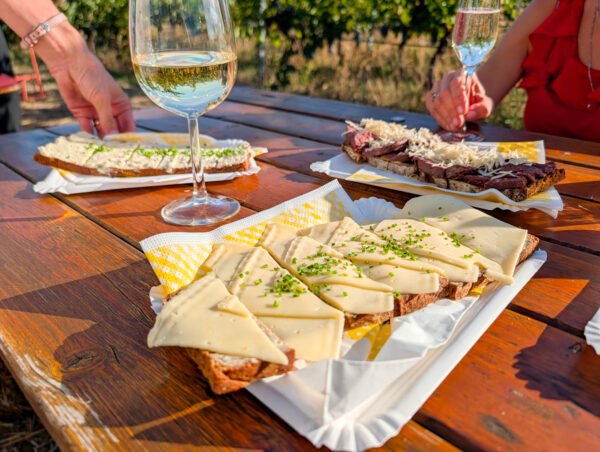
Classic Heuriger plates along the Genussmeile. Photo by Alis Monte [CC BY-SA 4.0], via Connecting Vienna
Wine Tips
- Best wines: Zierfandler, Spätrot-Rotgipfler & Rotgipfler
- Good wines: Rosé frizzante
- Best hubs: Gumpoldkirchen
How to get to Thermeregion
- Train station: Mödling Bahnhof – Gumpoldskirchen bahnhof – Baden bei Wien Bahnhof
- Coordinates: 48.0021° N, 16.2309° E (Baden bei Wien)
- Distance from Vienna: ± 38.4km / 23.9mi
- Recommended route: Wien Meidling/Wien Hbf – Baden bei Wien (Rex Train), Wien Meidling/Wien Hbf – Gumpoldskirchen Bahnhof (S3, S4)
- Trip duration: ~0h30
- Recommended ticket: ÖBB / WLB day fares as needed; for wider NÖ weekends use VOR Freizeitticket €19.90 or Plus €29.60 (vor.at, DE)
- Best hiking trail: Genussmeile (event weekends) · vineyard paths around Gumpoldskirchen year-round
- Map / calendar: Gumpoldskirchen guide
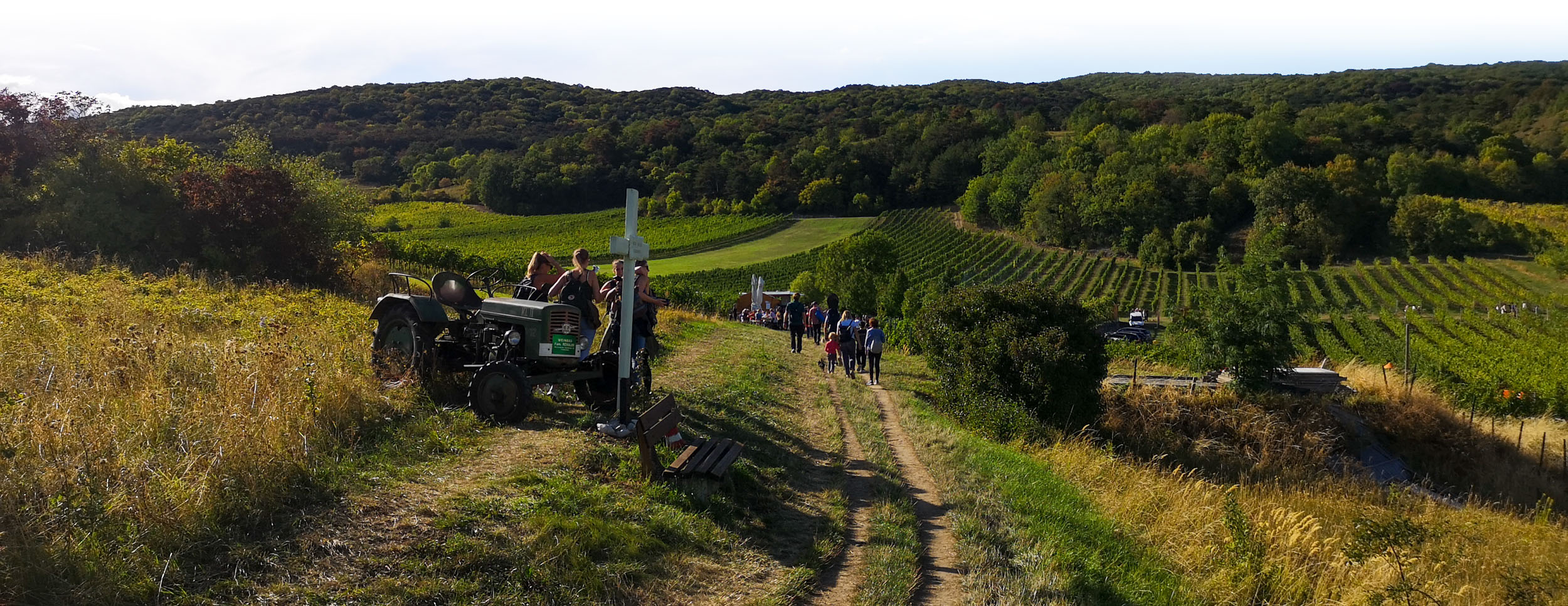
Every year, twice a year, many people from Austria and abroad gather on the vineyards of Thermeregion on “The Pleasure Mile”. Photo by Alis Monte [CC BY-SA 4.0], via Connecting Vienna
Burgenland
The sunniest state of all Austria. The area around Lake Neusiedler See enjoys the sun more than 300 days a year. Naturally, it has a big impact on the quality and types of wines produced in Burgenland. The state is perfect for sweet dessert wines, but it is the red wines for which the region is best known. Blaufrankish and Zweigelt are the stars of Burgenland, offering a totally different wine-tasting experience compared to the colder Lower Austria and its white wines. The sunny region is also great for full-bodied wines, most notably Weissburgunder and Chardonnay.
The sunny weather makes Burgenland not only good for wine production but for outdoor activities as well. The flat nature of the areas surrounding Neusiedler See makes this part of Burgenland perfect for cycling, but hiking is viable nevertheless. Especially in the area of Neusiedler See-Seewinkel National Park. Bird-watchers will find this area especially interesting, as many species choose these wetlands for their home or breeding.
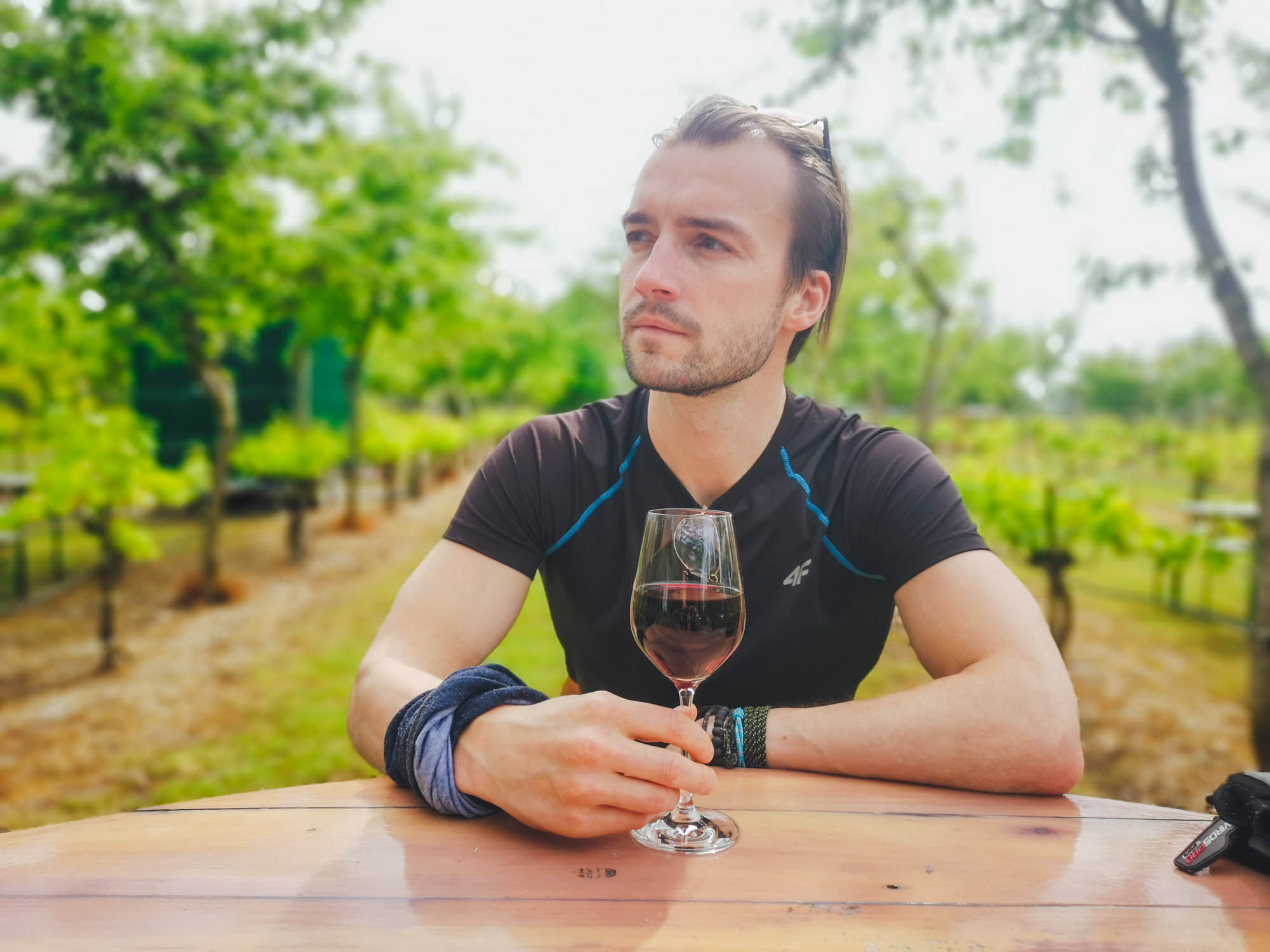
What can be better than a refreshing glass of wine in the midst oh hike? Photo by Alis Monte [CC BY-SA 4.0], via Connecting Vienna
Wine Tips
- Best wines: Zweigelt & Blaufränkisch
- Good wines: Weißburgunder
- Best hubs: Rust & Neusiedl am See
How to get to Burgenland
- Train station: Wien Bahnhof – Neusiedl am See Bahnhof
- Coordinates: 47.9474° N, 16.8454° E (Neusiedl am See)
- Distance from Vienna: ± 52.6km / 32.68mi
- Recommended route: Wien Bahnhof/Neusiedl am See (REX)
- Trip duration: 0h40
- Recommended ticket: Einfach-Raus Ticket from €38 / 2 people (oebb.at) · single one-way ~€9.80 band depending on day
- Fastest ticket: REX (0h40)
- Best hiking trail: –
- Map: Burgenland hikes
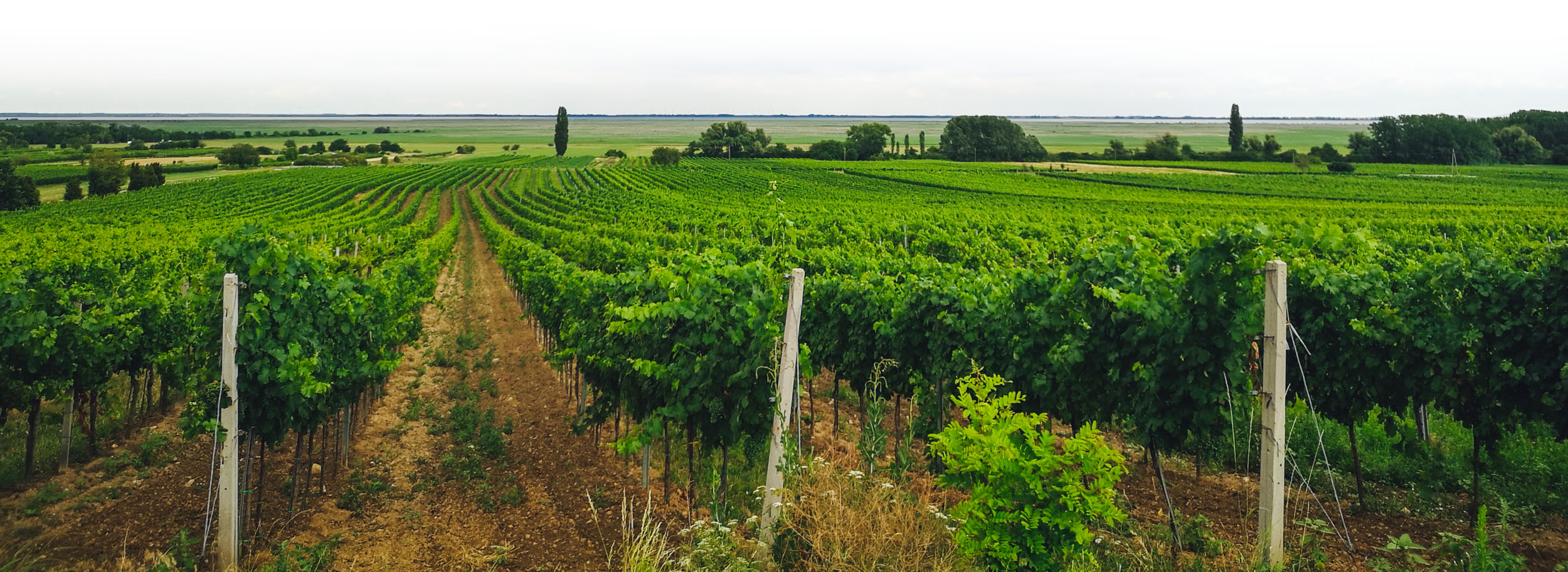
Due to its warm climate, Burgenland is the home of Austrian red wines. Photo by Alis Monte [CC BY-SA 4.0], via Connecting Vienna
Vienna
Vienna. Vienna is fantastic. Vienna is fantastic for many different reasons, and one of them is wine. As I already mentioned, it is the only Capital in Europe with viticulture with protected designation of origin status. What I really love about living in Vienna is the possibility to exchange bars for the local vineyards for Friday drinks. While wine production is limited to a fairly small area, there is enough to supply local wine enthusiasts throughout the year. The main wine fields are situated to the North of Vienna around Grinzing, Heiligenstadt, and Nussdorf. Due to the plentiful greenery, these areas are also very suitable for hiking, or at least Ludwig van Beethoven thought so. He loved walking in this part of Vienna. Who knows, maybe you’ll get a genius idea while hiking in the awe-inspiring vineyards of the Austrian Capital as well!
Vienna Wine Hiking Day
Every autumn, when the conditions are right, Vienna Wine Hiking Day is held in the vineyards of the Austrian Capital. Usually, the event floods the wine fields with people, and even the increased number of open vintners can hardly keep up with the Viennese lust for the local favourite wines. There are four different routes available for wine enthusiasts in Stammersdorf, Mauer, Ottakring, and the legendary area around Kahlenberg and Nussdorf. It so happens that the weather conditions are always perfect for the day, as my local friend told me, “Usually, it is the last summer weekend of the year.”
Wiener Weinwandertag Details (2026)
- Dates: 26–27 September 2026
- Hours: 10:00–18:00
- Routes: Neustift–Nussdorf 10.8 km · Strebersdorf–Stammersdorf 9.6 km · Ottakring ~4.5 km · Mauer 4.6 km
- Official (DE): wien.gv.at/veranstaltungen/weinwandertag · also wien.info
- Transit: tram 38 / bus 38A / tram D · WienMobil app
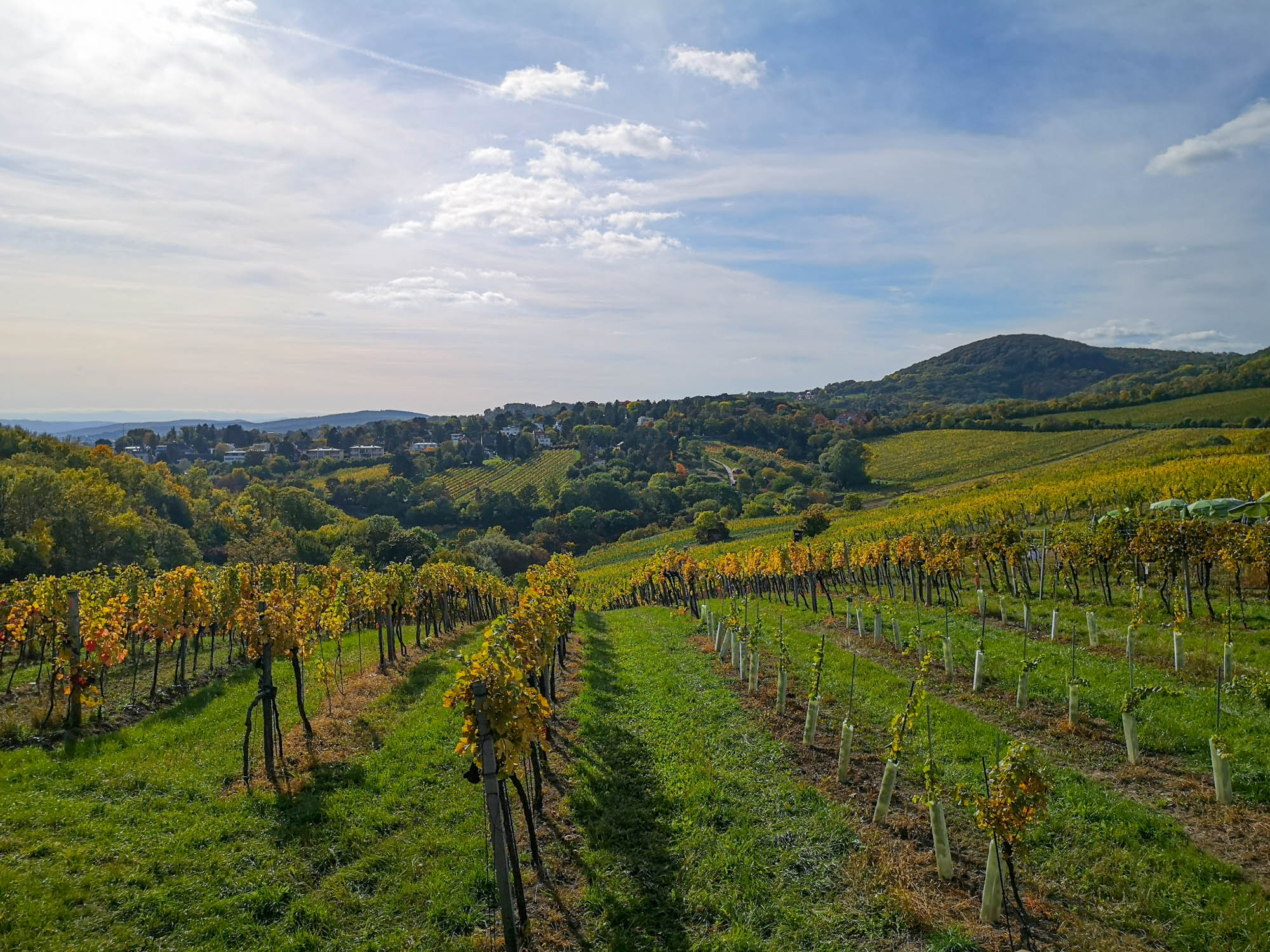
The vineyards of the Vienna is the best place to hike within the area of the city. Photo by Alis Monte [CC BY-SA 4.0], via Connecting Vienna
Gemischter Satz
I find the most unique feature of the local Viennese viticulture to be its prime wine, Gemischter Satz. The main feature of the wine is the concept itself. Instead of one vine variety, Gemischter Satz is composed of different ones. It is not simply Cuvee, the production of this wine has some rules attached to it. First, the different vines have to be grown in the same spot. Second, it has to be gathered at the same time! This makes the whole procedure much more different because different grapes will be at their prime at different times. The outcome of Gemischter Satz is very hard to predict, but instead of perfecting the viticulture of one or a few vine varieties, in Vienna, winemakers aim for the harmony of different vines. Good Gemischter Satz is like a good orchestra.
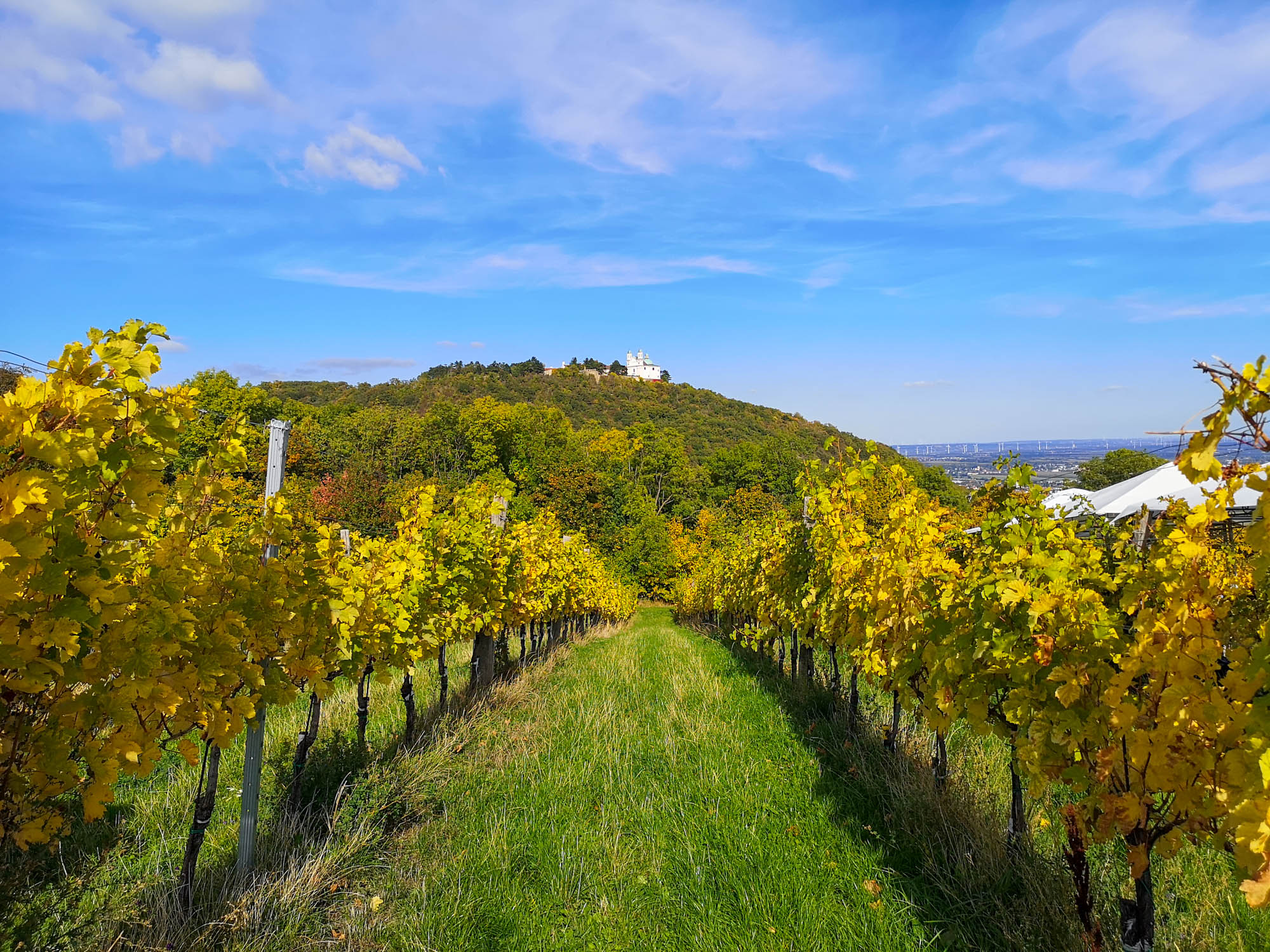
Leopoldsberg – the place where the Polish-Lithuanian Commonwealth & other Christian forces defeated the army of the Ottoman Empire and broke the siege of Vienna in 1683. Photo by Alis Monte [CC BY-SA 4.0], via Connecting Vienna
Wine Tips
- Best wines: Gemischter Satz
- Good wines: Weissburgunder (Pinot blanc)
- Best hubs: Grinzing & Nussdorf
How to get to Vienna Vineyards
- Tram station: Nussdorf Beethovengang & Grinzing
- Coordinates: 48.2763° N, 16.3333° E (Kahlenberg)
- Recommended route to Grinzing & Kahlenberg: Schottentor – Grinzing (38 tram), Grinzing – Kahlenberg (38A bus)
- Recommended route to Nussdorf: Schottentor – Beethovengang (D tram)
- Recommended ticket: Standard Vienna tickets (Free with Vienna City Card)
- Best hiking trail: Kahlenberg – Nussdorf

Vienna vineyards are situated on the hills overlooking the city. Photo by Alis Monte [CC BY-SA 4.0], via Connecting Vienna
Wine Tasting & Hiking Tours from Vienna
If you are not a local, you probably haven’t heard much of Austrian wines. Diving into the vast local viticulture might be a bit overwhelming, especially if you have limited time. For some people, it is natural to jump into the unknown and take what you get, but others prefer to take their time. In that case, a guided tour might be a good option to unveil the best wines and find the best routes for each region.
- Vienna: Local Wine Tasting in a Historic Roman Wine Cellar (40min | from €29/person) – The price includes access, 3-wine tasting, and local delicacies.
- Vienna: 3-Hour Hiking Tour in Vienna Vineyards (3h00 | from €265/group up to 10) – Typical Vienna wine hiking experience. The price includes just a guide.
- From Vienna: Gumpoldskirchen Full-day Wine Tasting Tour (8h30 | from €129/person) – The tour includes wine tasting with an expert in Gumpoldskirchen and a visit to the second-oldest Austrian winery (winter) or a typical Thermeregion wine hike (summer).
- From Vienna: Wachau Valley Winery Biking Tour (9h30 | from €109/person) – The tour has a flexible itinerary and includes bike rentals and wine-tasting fees.
- From Vienna: Weinfiertel Half-day Countryside Wine Tour with Meal (5h30 | from €120/person) – The tour includes wine tasting in 2 or 3 family–owned wineries in Weinfiertel Wine Region and more.
All of these tours are curated by GetYourGuide; therefore, you can cancel up to 24 hours in advance to receive a full refund.

A sight I can’t get tired of. Photo by A.L> [CC BY-SA 4.0], via Connecting Vienna
Useful Links
- Genussmeile Thermenregion 2026 — Connecting Vienna
- Gumpoldskirchen wines & Heuriger Calendar 2026 — Connecting Vienna
- Heurigenkalender Gumpoldskirchen — municipal Ausgesteckt calendar (DE)
- Wiener Weinwandertag — City of Vienna (DE)
- VOR Freizeitticket — regional day tickets (DE)
- ÖBB Einfach-Raus — ÖBB leisure ticket (DE)
Personal Experience
As a big fan and enthusiast of mountains and mountain hiking, I have to admit that it is not the Austrian Alps that I miss the most when I’m out of the country. These majestic mountains are not distinctive only to Austria. In my opinion, what is the most distinguishing characteristic of Lower Austria is its extensive love and enthusiasm for the craft of very fine wines in the country. It is something that I’ve failed to find elsewhere so far. The supply of Austrian wines is very limited; therefore, it is relatively hard to find them outside the country, hence their international “popularity”. Some wineries are open just a few days a year, with all of their stock being consumed within those brief days. It is physically impossible to repeat such experiences, and that is exactly what I miss the most while outside Austria.
Another great feature of wine culture in Austria is caused by the locals’ love for the outdoors. This enables the possibility for wine bars to establish themselves in very unusual places, which are often the most beautiful part of the vineyards. For me personally, this love started with the Wachau Valley; then I’ve begun to find myself in Gumpoldskirchen more often on weekends than in any bar, and finally, I’ve learned to appreciate the unique and complex viticulture of Vienna. Today, no matter where I go in Lower Austria or Burgenland, I celebrate the combination of the outdoors and fine local wines.
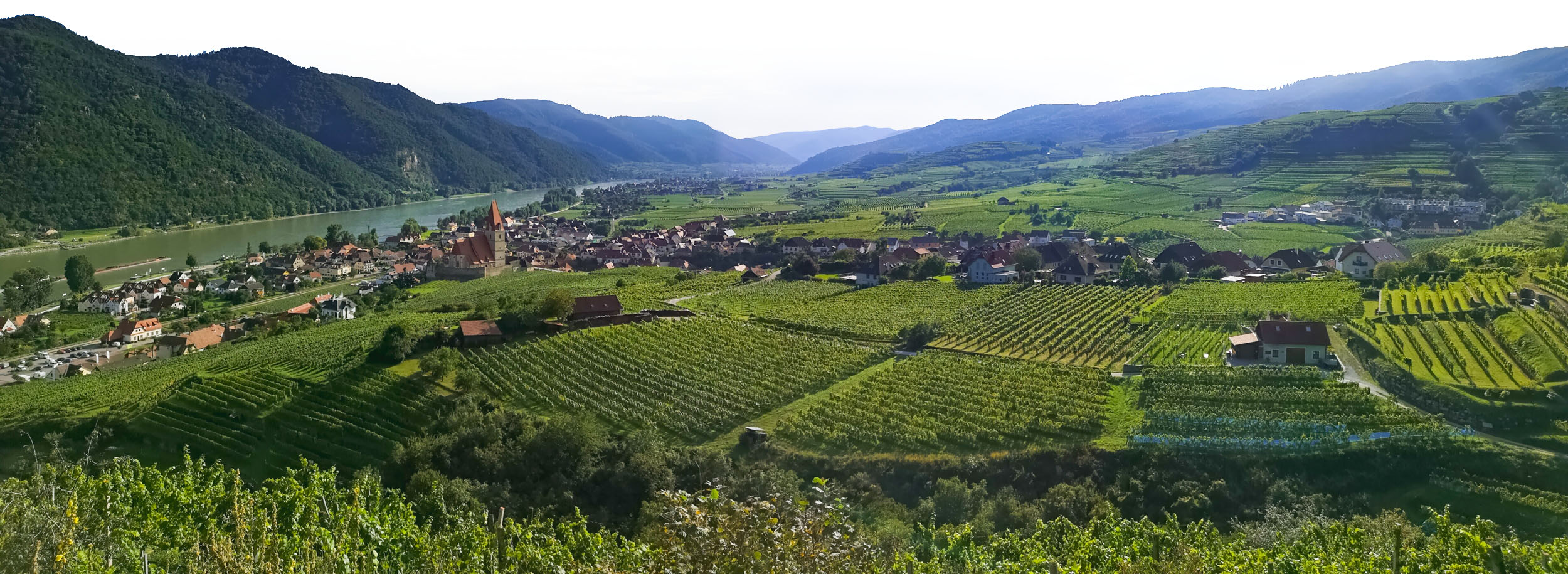
All content and photos by Alis Monte, unless stated differently. If you want to collaborate, contact me on hi@connectingvienna.com Photo by Alis Monte [CC BY-SA 4.0], via Connecting Vienna
Frequently Asked Questions
When is the best time for wine hikes near Vienna?
Weinherbst (August–October), when Sturm, Junger Wein, Genussmeile, and Wiener Weinwandertag cluster. Vineyard walks work year-round when Heurigen are Ausgesteckt.
What is Genussmeile vs Wiener Weinwandertag?
Genussmeile is the Thermenregion vineyard “longest bar” on two September weekends (2026: 5–6 & 12–13 Sep). Wiener Weinwandertag is Vienna’s own vineyard day (2026: 26–27 Sep) on four city wine routes.
Which tickets make sense for wine day trips?
Inside Vienna: standard Wiener Linien tickets. Thermenregion: ÖBB/WLB. Broader NÖ/Burgenland weekends: VOR Freizeitticket €19.90 or Plus €29.60. Two people on ÖBB leisure days: Einfach-Raus from €38.
Where do I check if a Heuriger is open?
For Gumpoldskirchen, use the Heuriger Calendar 2026 (https://connectingvienna.com/austria/thermenregion/gumpoldskirchen/) and gumpoldskirchen.at/Heurigenkalender (DE).
Can I do a wine hike without a car?
Yes — tram 38 / 38A / D for Vienna vines; ÖBB/WLB for Thermenregion hubs (Mödling, Gumpoldskirchen, Baden); REX toward Krems for Wachau.
