September 17, 2026
Guide to Weltmuseum Wien Collections & Artefacts
Architecture, Culture, Ethnography, Guide, History, Hofburg, Innere Stadt, Museums, Music
Top attractions:
About Weltmuseum Wien
The World Museum (ger. Weltmuseum Wien) in Vienna is one of the most spectacular and rich ethnology museums in the world – the exposition has one of the biggest non-European artifact collections in one place. It takes a lot of time to see everything it has on display, and yet it is only 1.5% of the 200,000 artifacts Weltmuseum Wien possesses. The collection comes from many Austrian nobles, including the famous Archduke Franz Ferdinand, who traveled the world and, mainly, traded or simply bought goods. Of course, the collection includes parts of the ugly colonial era, but that is not hidden from the public. Instead, the means of trading and the price the local people had to accept are put on display, thus opening a public discussion. On the other hand, Weltmuseum Wien has gathered a truly remarkable collection, which is definitely very underrated both abroad and within the country.
Also known as: Weltmuseum Wien, World Museum Vienna, Museum of Ethnology Vienna, Museum für Völkerkunde (historic name).
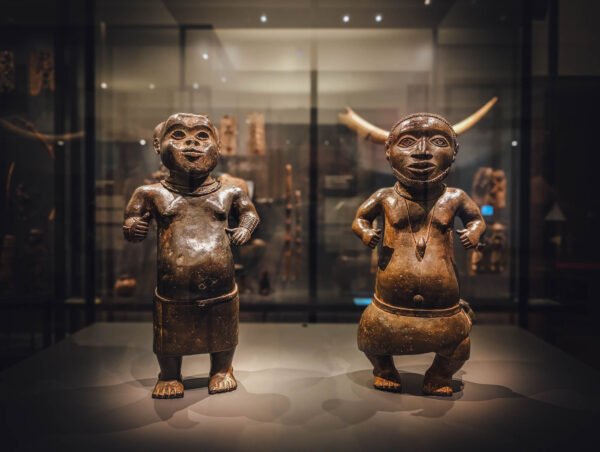
These two statues are the oldest record of dwarfs in the Benin Kingdom. Photo by Alis Monte [CC BY-SA 4.0], via Connecting Vienna
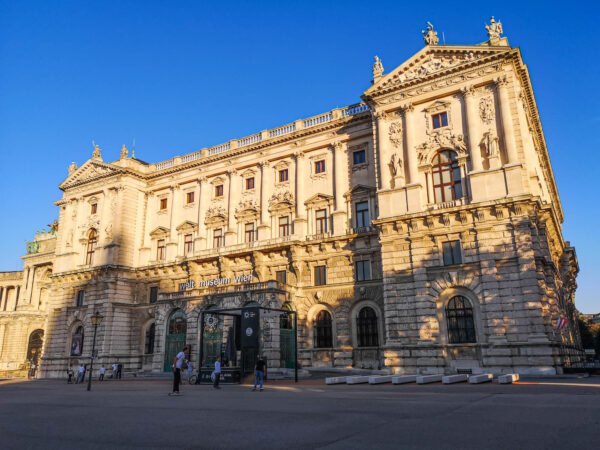
The entrance to Weltmuseum Wien is located by Heldenplatz near Ringstrasse. Photo by Alis Monte [CC BY-SA 4.0], via Connecting Vienna
What’s inside
Weltmuseum Wien is a part of one of the most famous, if not the most famous, museums in the city – Kunsthistorisches Museum Wien (eng. Art History Museum of Vienna), which clearly overshadows its counterparts, making Weltmuseum Wien clearly underrated. Today, the museum has three permanent exhibitions.
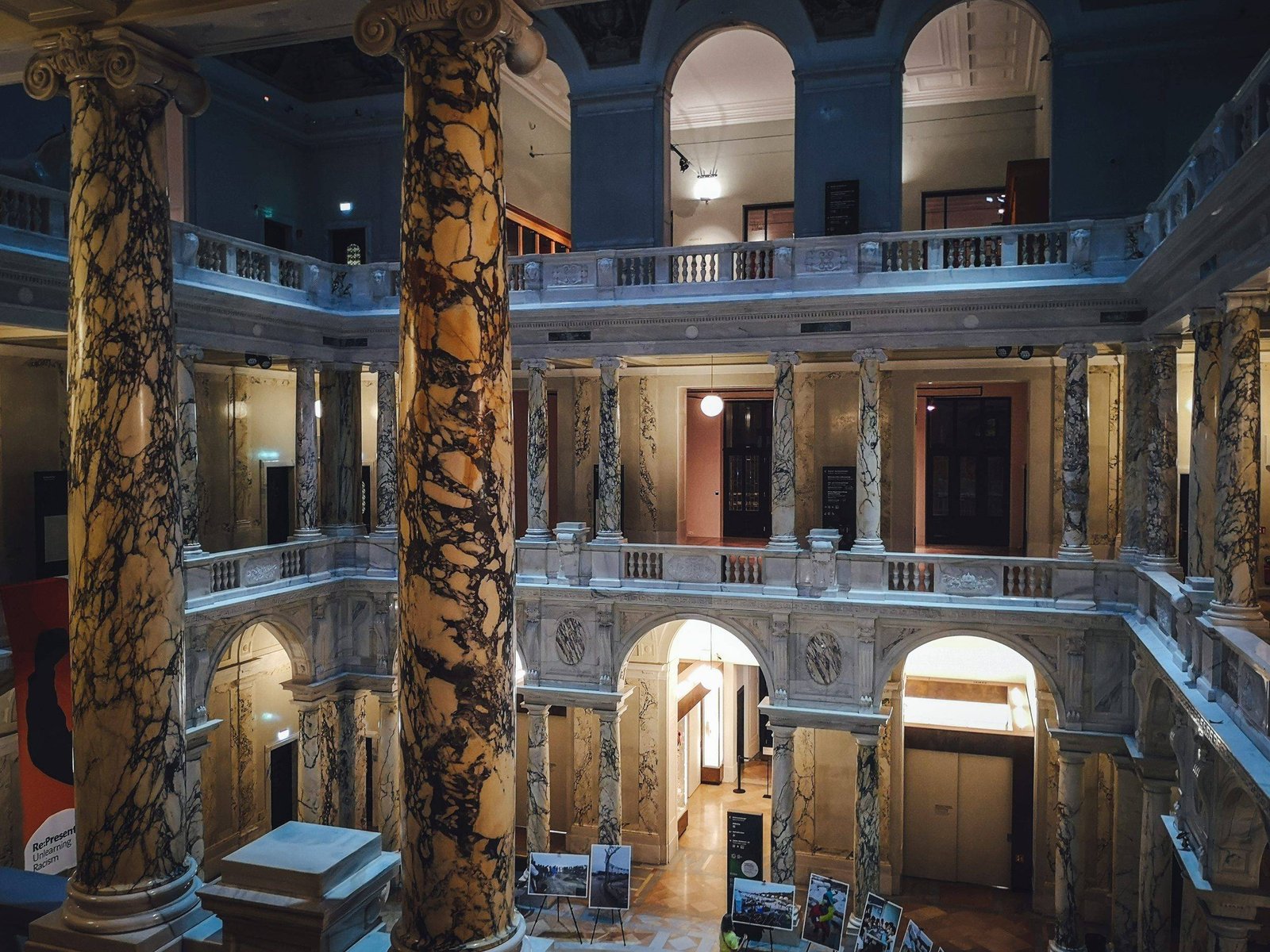
Weltmuseum Wien is situated around this beautiful marble hall in Hofburg Palace. Photo by Alis Monte [CC BY-SA 4.0], via Connecting Vienna
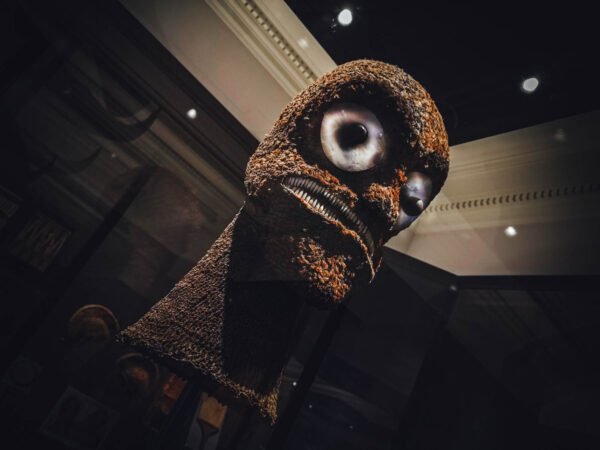
The feather bust of god was used in Hawaii during a war to scare the enemy. Photo by Alis Monte [CC BY-SA 4.0], via Connecting Vienna
Museum of Ethnography
The Museum of Ethnography is the core of Weltmuseum Wien; the whole complex used to be under this name. This museum is the Habsburg version of the British Museum in London. Austria had almost no overseas colonies; therefore, the vast collection of Weltmuseum Wien was primarily gathered by means of trade by traveling Habsburg dukes.
Now, these great ancient artifacts are displayed throughout the rooms in the southwest wing of the Hofburg Palace. Each one of them uncovers years of advanced cultures of different parts of the world, of which, I believe, many non-experts haven’t heard much before. My favorite ones were the Mesoamerica, Ethiopia, Benin, and Polynesia collections.
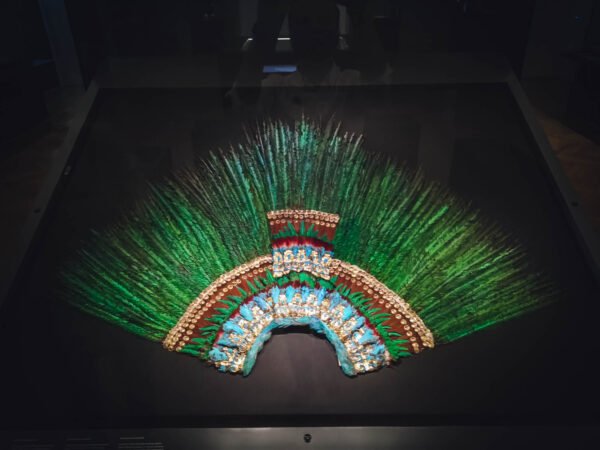
Quetzal feathered headdress.
Photo by Alis Monte [CC BY-SA 4.0], via Connecting Vienna
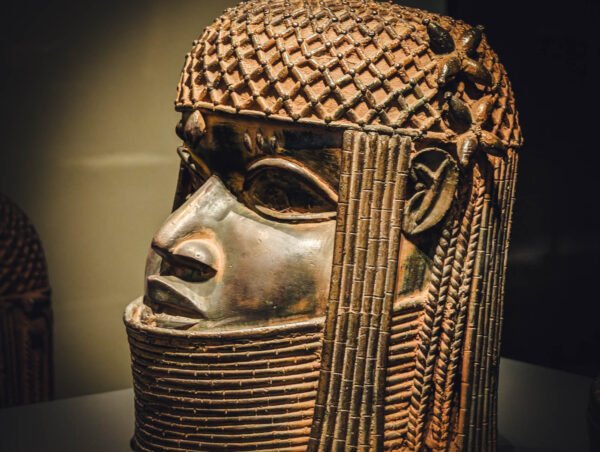
Commemorative Head of a King (Benin Kingdom). Photo by Alis Monte [CC BY-SA 4.0], via Connecting Vienna
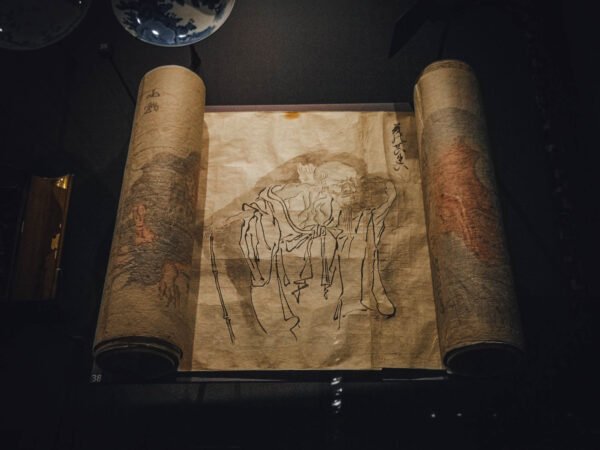
Asian hanging scroll with calligraphy/figure. Photo by Alis Monte [CC BY-SA 4.0], via Connecting the Dots
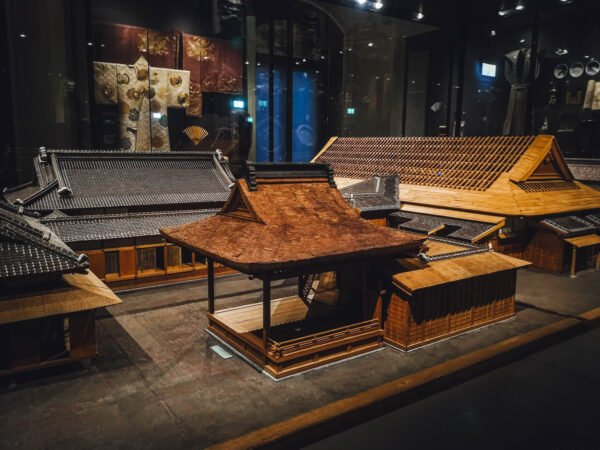
Daimyo Residence – Japan pavilion in World’s Fair Vienna 1873. Photo by Alis Monte [CC BY-SA 4.0], via Connecting the Dots
Imperial Armoury
Armors, weapons, banners, and more armor. While the Habsburg Empire was not famous for the efficiency of their armies, at least they must’ve looked impressive. Among the countless collection of armor look out for rarer items like Jousting armor, Landsknecht armor, Milanese armor, Ceremonial saber, and Falcon hood. If the Imperial collection of armors will fail to excite with its items, for sure the share quantity of them is impressive.
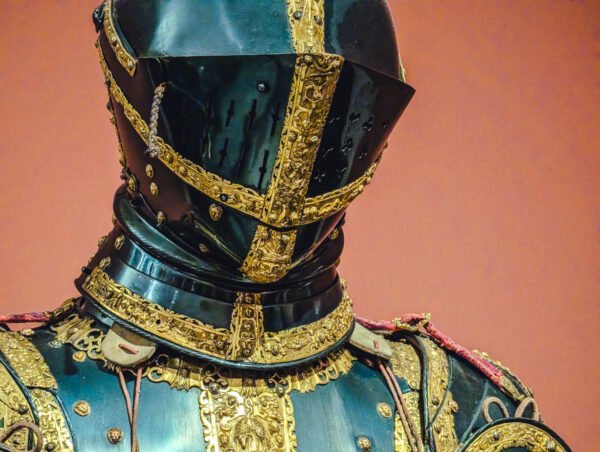
Close detail of armour in Imperial Armoury. The iconic Hofburg palace wing – Neue Burg from Heldenplatz. Photo by Alis Monte [CC BY-SA 4.0], via Connecting Vienna
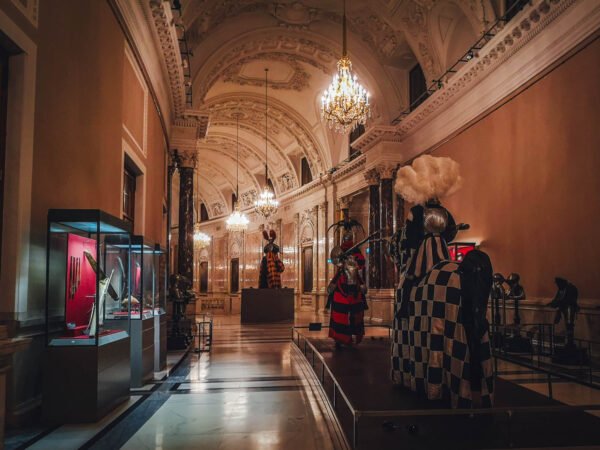
The armies of Habsburgs were not famous for its strength but they were fancy at least. Photo by Alis Monte [CC BY-SA 4.0], via Connecting Vienna
Collection of Historic Musical Instruments
The collection of musical instruments in Weltmuseum Wien could be the most underrated hidden gem among all the federal museums in Vienna. One would expect that half-millennia-old instruments would be interesting to anyone, and if not, maybe pianos played by such masters as J. S. Beethoven, J. Haydn, F. Schubert, J. Brahms, and F. Liszt would attract some people in the musical capital of the world? Instead, the Collection of Historic Musical Instruments is located in the furthest corner of Weltmuseum Wien as an irrelevant sidekick to an already underappreciated museum of endless stocks of artifacts that didn’t find a place in the Art History Museum or somewhere else. The Collection of Historic Musical Instruments is a must-see collection in Vienna for people who appreciate the city at its best – music.
Finding the Collection of Historic Musical Instruments is half the adventure — the entrance sits in a quiet corner and is easy to walk past. Once inside, it is not only glass cases: visitors (kids and adults) can try a few instruments, including a piano and a clavichord. That hands-on corner is our son’s favourite part of the whole museum.
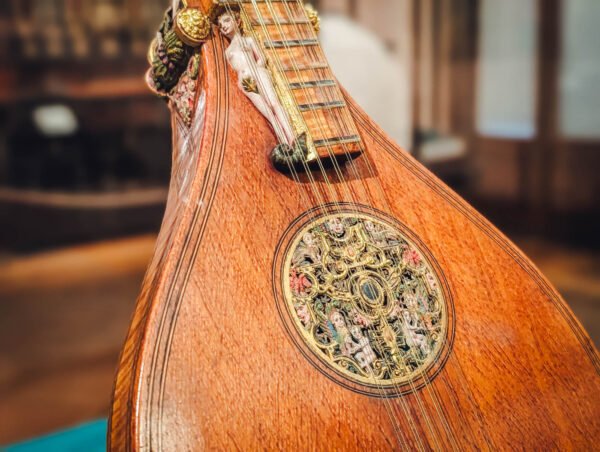
Close detail of historic musical instrument. Photo by Alis Monte [CC BY-SA 4.0], via Connecting Vienna
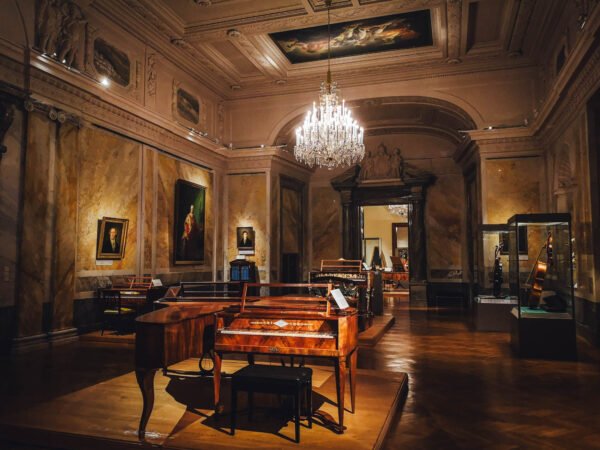
A piano, which supposedly had been played by both Ludwig van Beethoven and Joseph Haydn. Photo by Alis Monte [CC BY-SA 4.0], via Connecting Vienna
History of Weltmuseum Wien
The origins of the museum date back to 1806, when chunks of J. J. Cook’s collections were brought to Vienna and put on display. The number of artifacts grew quickly; thus, by the end of the century, the collection was already quite impressive. Back then, it was available in the Natural History Museum, but in 1928 an independent museum was created in the Corps de Logis of the Hofburg Palace. Weltmuseum Wien got its current name only in 2013, when a set of changes were presented to the public and approved by the government. After the reconstruction works, it was opened again to the public only in 2017, making Weltmuseum Wien a relatively new museum under this name.
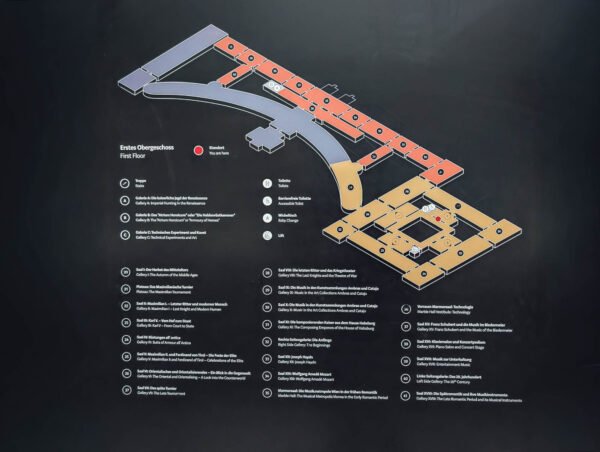
First floor-plan. Photo by Alis Monte [CC BY-SA 4.0], via Connecting the Dots
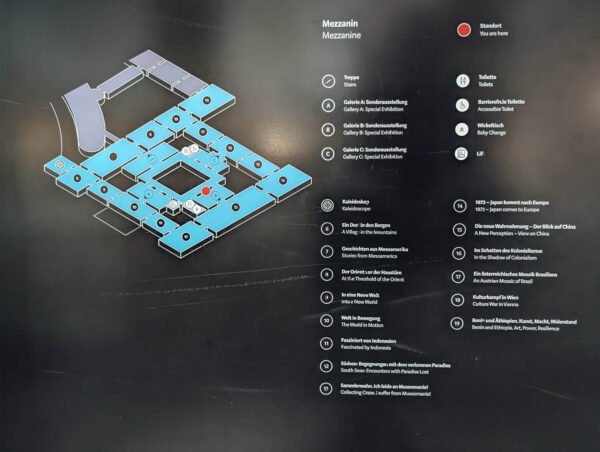
Mezzanine floor-plan. Photo by Alis Monte [CC BY-SA 4.0], via Connecting the Dots
Tickets & combos
Buy timed entry when the museum is busy; Wien tickets and trusted partners both work. Vienna City Card holders get a discount, not free entry. A Vienna PASS is worth considering if you are stacking several paid Hofburg-area sights the same trip.
- Adult entrance: €16 (as listed previously; confirm on the day)
- Vienna City Card: €15 discounted rate (not free entry)
- Online / skip-the-line: Weltmuseum Wien ticket
- Same neighbourhood: Hofburg Sisi / Apartments and Spanish Riding School are separate tickets — see Useful Links
- Multi-sight days: Vienna PASS
Practical tips
- Hours (official): daily except Monday, 10:00–18:00; Tuesday 10:00–21:00. Closed Monday.
- Neue Hofburg façade works: some rooms or exhibits may close at short notice — check weltmuseumwien.at before you go.
- Read the provenance labels — the museum puts acquisition context on display; that is part of the visit, not a side note.
- Pair with Kunsthistorisches across Maria-Theresien-Platz only if you have a full day; they are separate tickets.
- Entrance is from the Heldenplatz / Ring side of Neue Burg — not the Michaelerkuppel Sisi door.
- Prefer U2/U3 Volkstheater or trams on the Ring; walk the last stretch.
- There is a café inside; it is free to enter (you can use the café without a museum ticket).
- Children’s corner near the café.
- Lockers near the ticket desk (~€1–2); you can get a coin at the ticket desk if you need one.
- The instruments section entrance is easy to miss — seek it out; playable instruments, including a piano and a clavichord, are a family highlight.
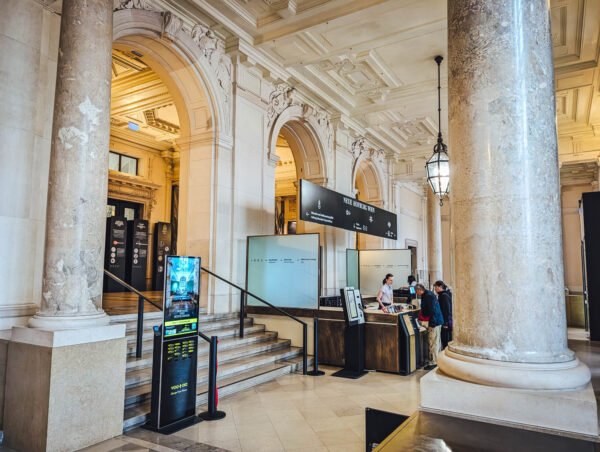
Ticket desk / entrance lobby; lockers may be visible at far left. Photo by Alis Monte [CC BY-SA 4.0], via Connecting the Dots
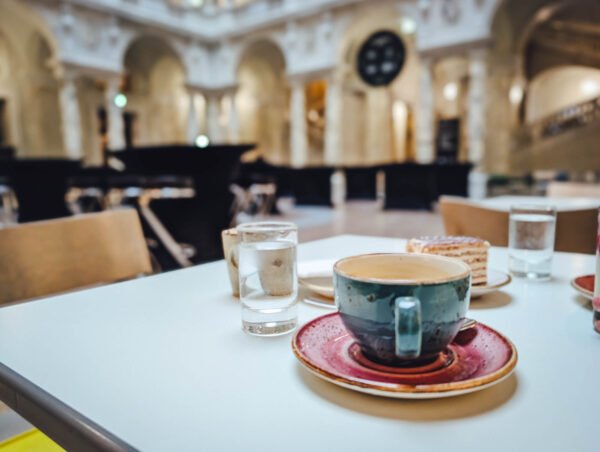
Café table in Weltmuseum hall (free to enter).Photo by Alis Monte [CC BY-SA 4.0], via Connecting the Dots
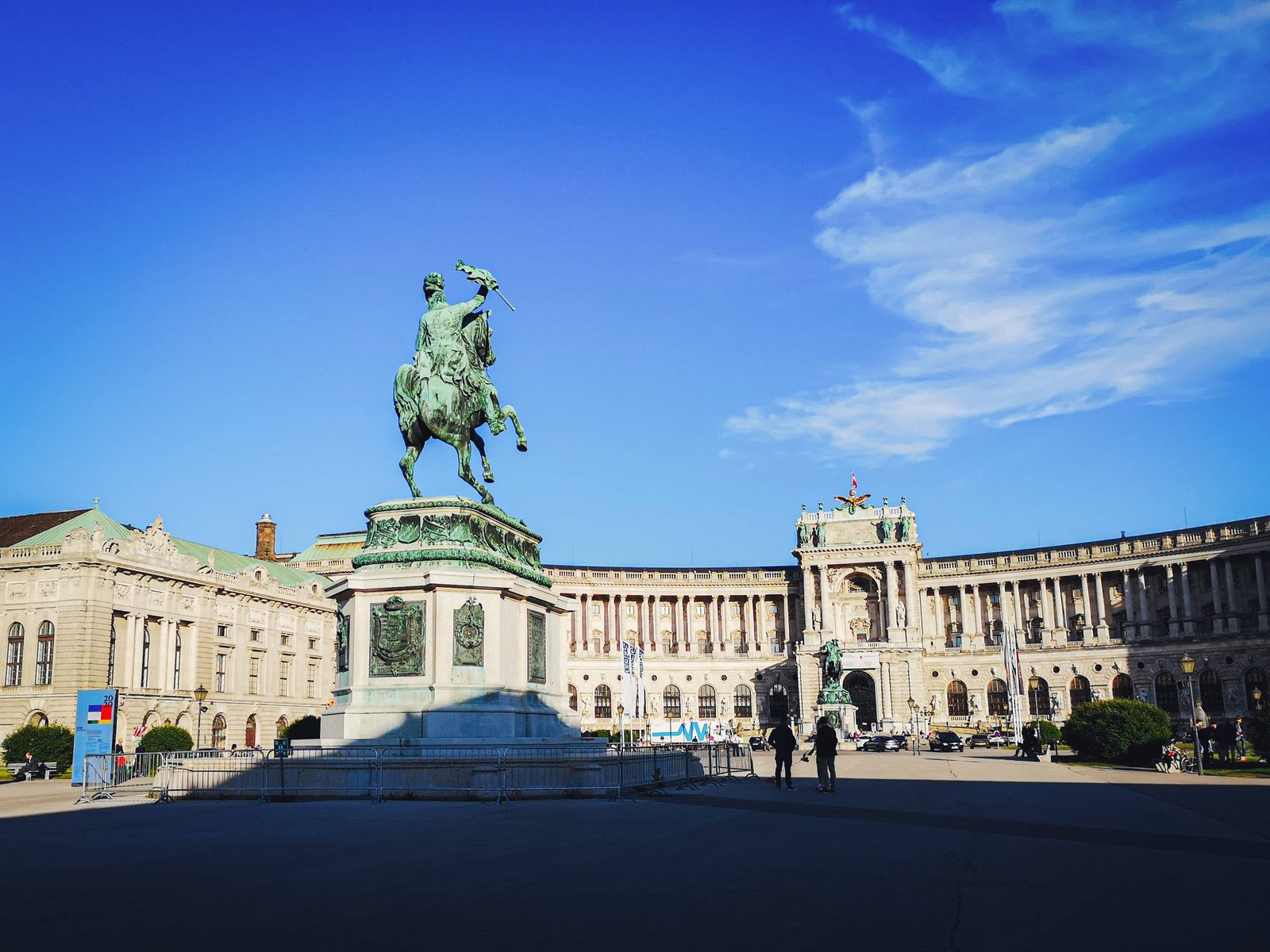
The entrance to Weltmuseum Wien is from Heldenplatz side. Photo by Alis Monte [CC BY-SA 4.0], via Connecting Vienna
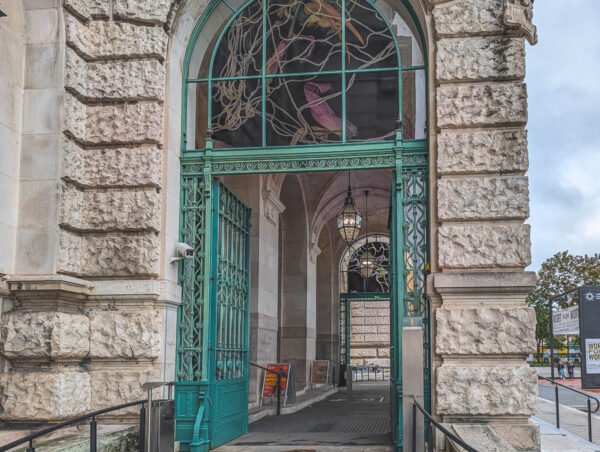
Approach walk to Weltmuseum Wien across Heldenplatz. Photo by Alis Monte [CC BY-SA 4.0], via Connecting Vienna
Ready to book?
Skip the ticket line when you can: Weltmuseum Wien entrance ticket. Same imperial neighbourhood: Hofburg & Empress Sisi guided tour or a Spanish Riding School performance. Stacking several paid sights: Vienna PASS.
Weltmuseum Wien Details
- Location: Innere Stadt (1st district)
- Region: Vienna, Austria
- Address: Heldenplatz, Neue Hofburg, 1010 Vienna
- Created: 1806 (collections); independent museum 1928; current name 2013; reopened 2017
- Architectural Style: Baroque / Neue Burg wing
- UNESCO World Heritage Site: 2001 (Historic Centre of Vienna)
- Entrance: Heldenplatz
- Entrance fee: €16 adults; €15 with Vienna City Card
- Tickets: Weltmuseum Wien Skip-the-line ticket
- Opening hours: Tue–Sun 10:00–18:00; Tuesday until 21:00; closed Monday
- Phone: +43 1 525 24-0
- Transport: U2/U3 Volkstheater; U1/U2/U4 Karlsplatz; tram 1, 2, D, 71 Burgring / Ring
Location
How to get to Weltmuseum Wien
Weltmuseum Wien is a part of the Hofburg, situated at the far southwest of the Imperial Complex, which is located in the very heart of the city. Hofburg is like the Rome of Vienna; all roads lead to it. You won’t have any trouble reaching Hofburg in the Innere Stadt (eng. the Inner City) The entrance to Weltmuseum Wien is from the Ring Road and MuseumsQuartier side.
Pro tip: Traveling on public transport with a Vienna City Card is completely FREE.
By metro
Volkstheater (U3) and Karlsplatz (U1, U2 and U4) metro stations are the closest you can get to Weltmuseum Wien by means of public transport without using a bus or tram. There are other options as well; I would say that Stephansplatz (U1) would make the most pleasant walk to Weltmuseum Wien.
By tram
Trams 1, 2, 71, and D run via the Lord of the Ring Road – a circular street around the Inner City of Vienna. Most of the other tram lines in the city reach the Ring Road at one or another tram station. One of the biggest tram stations on the Ring Road of Vienna is Schottentor. It is located near the majestic Votivkirche; it would make a beautiful walk from here to Weltmuseum Wien.
By bus
There is no need to use a bus in this area of Vienna because it is better connected to trams or metro, I would recommend using them instead of a bus to reach Weltmuseum Wien from any direction.
By car
Using a car is not a recommended way of traveling around in the inner districts of Vienna. Public transport is very well developed in the Capital of Austria. If you must come to Weltmuseum Wien by car, you can use the parking lots around Ring Road, marked on the map.
Personal Experience
Since I haven’t heard much about the quality of the museum, I didn’t expect much. Weltmuseum Wien falls under the shadow of the more popular destinations in the great capital of the Habsburgs. The humongous collection of artifacts would easily make several popular museums in most other cities. It only proves how great the Empire was. Weltmuseum Wien is definitely worth your time on longer stays in Vienna, or even during a short one – if you prefer non-European cultures over classical or modern art. One way or another, Weltmuseum Wien is a great underrated destination for culture and history lovers in Vienna.
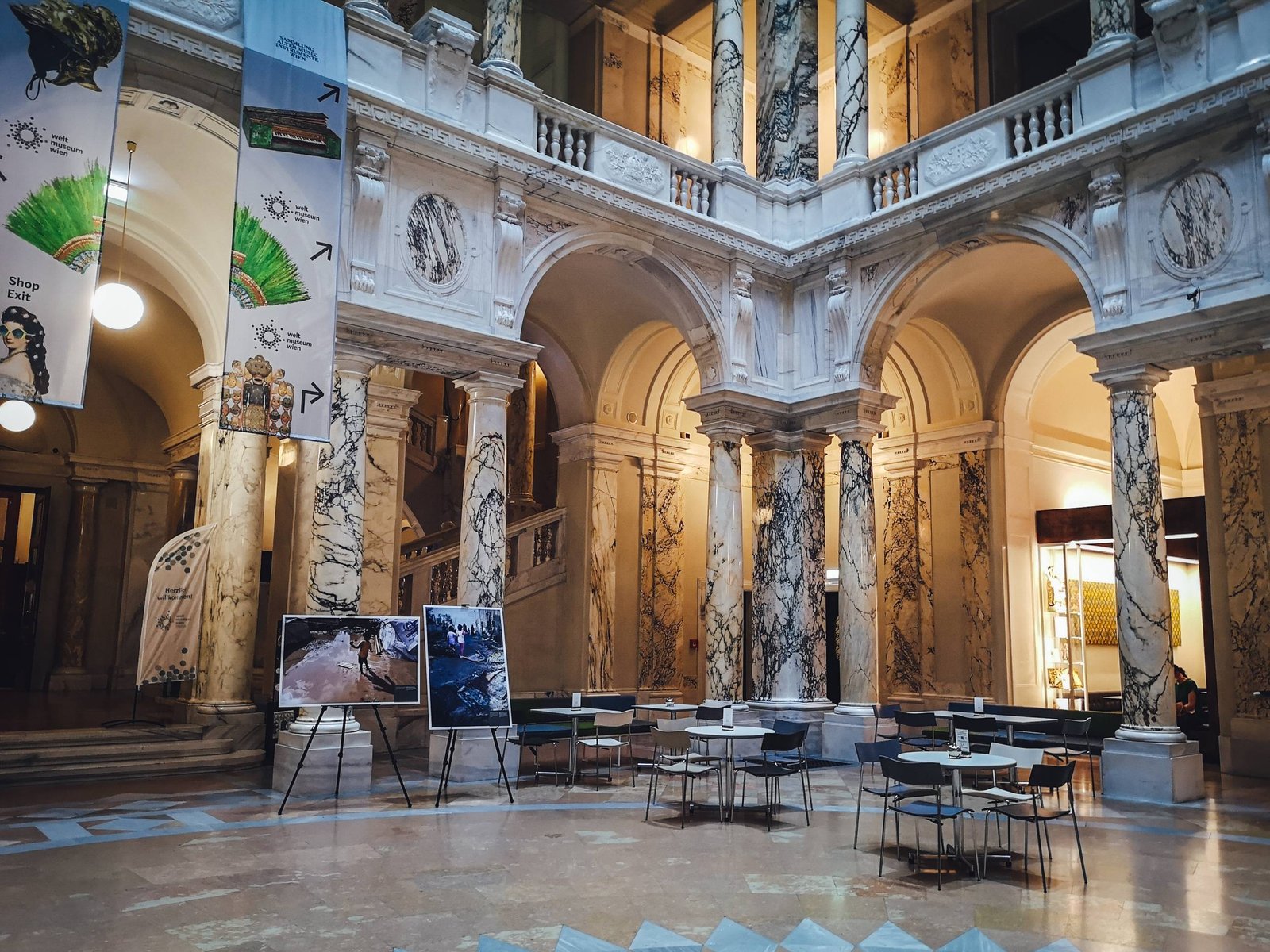
All content and photos by Alis Monte. If you want to collaborate, contact me on hi@connectingvienna.com. Photo by Alis Monte [CC BY-SA 4.0], via Connecting Vienna
Useful Links
Official
- Weltmuseum Wien (EN)
- Visit / tickets & hours (EN)
On Connecting Vienna
- Kunsthistorisches Museum
- Hofburg / Sisi guide (draft/neighbourhood companion)
- State Hall / Prunksaal
Tours & passes (partner)
