December 14, 2025
Kunsthistorisches Museum Vienna: Habsburg Art Treasures
Architecture, Art, Culture, History
This page contains links through which we may earn a small commission should you decide to book a tour from our partner.
Top attractions:
About Kunsthistorisches Museum
The Kunsthistorisches Museum (KHM) is Vienna’s foremost art museum and one of the world’s most significant collections of Old Master paintings. Housed in a monumental Renaissance Revival palace on Maria-Theresien-Platz in Vienna’s 1st district, the museum opened in 1891 to display the centuries-old Habsburg art collections—paintings, sculptures, antiquities, and decorative arts assembled across five centuries of imperial patronage.
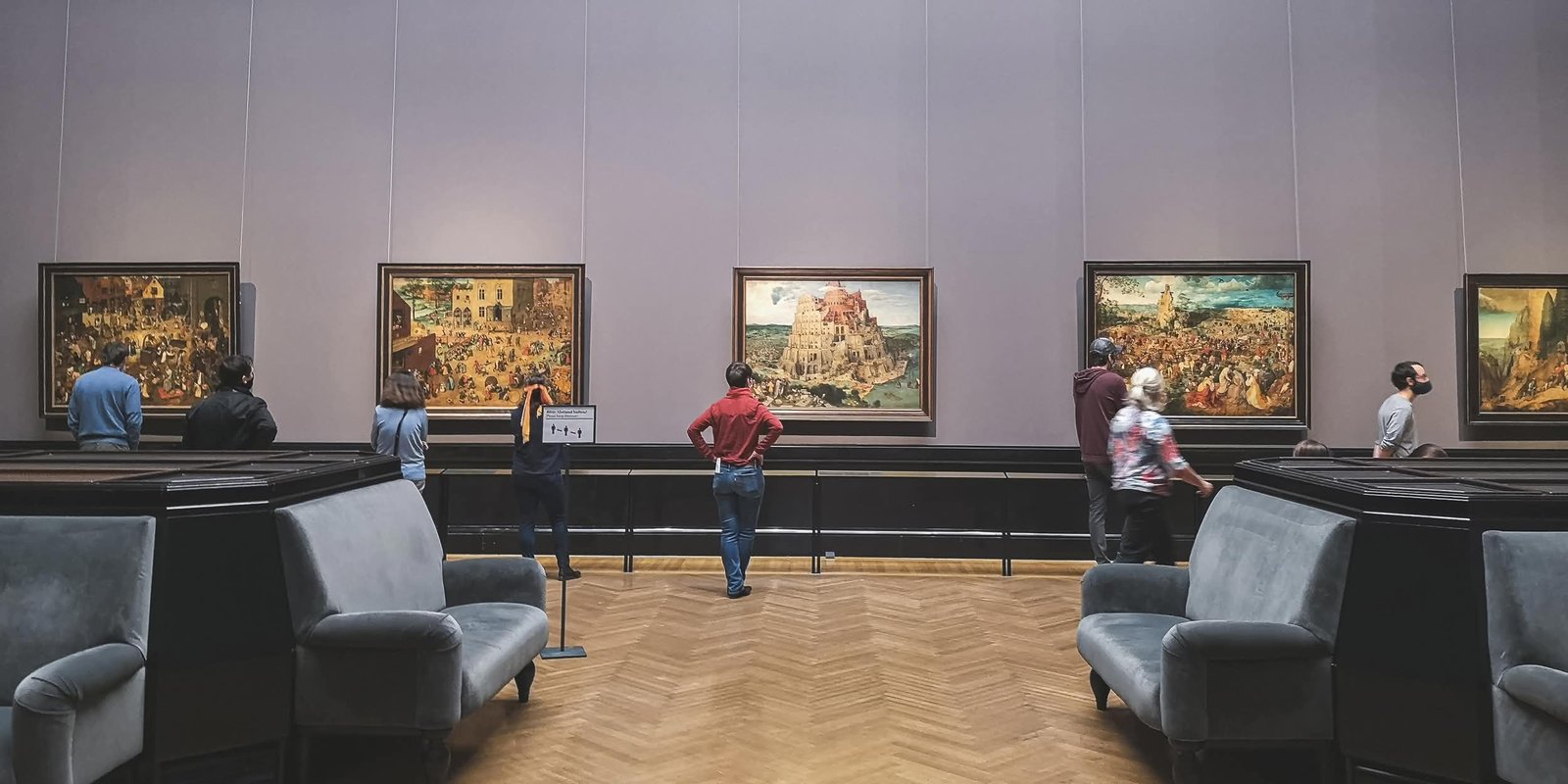
The Picture Gallery alone holds masterpieces by Bruegel, Vermeer, Raphael, Caravaggio, Titian, Rubens, and Velázquez. Nowhere else can you see twelve paintings by Pieter Bruegel the Elder—the world’s largest collection—including “The Tower of Babel,” “Hunters in the Snow,” and “Peasant Wedding.” The Kunstkammer (Chamber of Wonders) displays the legendary Saliera by Benvenuto Cellini, while Egyptian, Greek, and Roman antiquities trace nearly 5,000 years of Mediterranean civilization.
The building itself, designed by Gottfried Semper and Karl von Hasenauer as a twin to the Natural History Museum across the plaza, embeds Habsburg ideology into every surface: ceiling frescoes by Klimt and Makart, marble columns, gilded stucco, and a central dome that rises 60 m / 197 ft above the grand staircase. This isn’t a neutral container—it’s a deliberate argument about imperial power and cultural legitimacy, preserved intact since the 19th century.
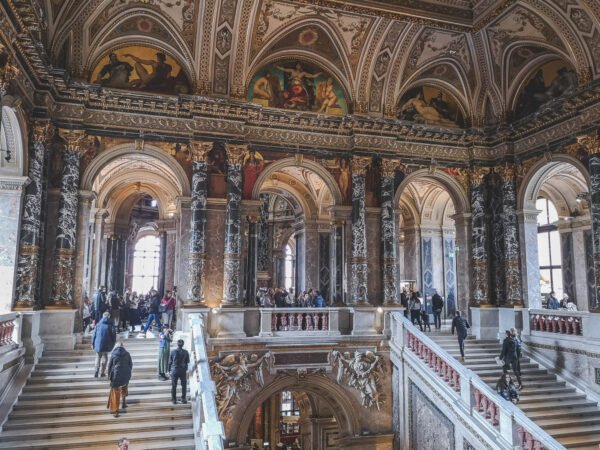
Art History Museum interior frescoes by Gustav Klimt and Hans Makart, Late 19th Century. Photo by Alis Monte [CC BY-SA 4.0], via Connecting the Dots
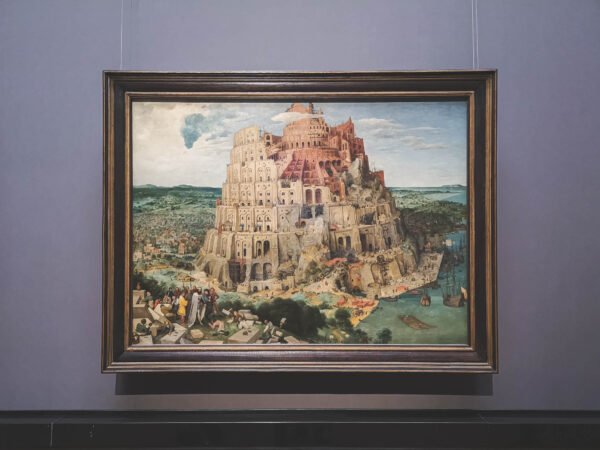
Pieter Bruegel the Elder, The Tower of Babel, 1563. Photo by Alis Monte [CC BY-SA 4.0], via Connecting the Dots
Kunsthistorisches Museum Details
- Location: Innere Stadt (1st district)
- Region: Vienna, Austria
- Address: Maria-Theresien-Platz, 1010
- Entrance: Maria-Theresien-Platz
- Opened: 1891 (19th century)
- Architectural Style: Renaissance Revival (Historicism)
- Entrance fee: €22 adults online / €24 on site; €19 reduced online / €20 on site; free under 19 (as of December 2025)
- Tickets: Available online and at the box office
- Opening hours: Mon–Sun 10:00–18:00; Thu 10:00–21:00 (as of December 2025; check official site for holiday hours)
- Phone: +43 1 525 24-0
- Transport: U2/U3 Volkstheater; Tram D, 1, 2, 2A, 57A (Burgring)
- Accessibility: Step-free access via side entrance (Burgring 5); lifts to all floors; wheelchairs available free of charge with advance reservation
Location
Current Exhibitions
- Picture Gallery — Permanent collection featuring the world’s largest Bruegel holdings, Vermeer, Raphael, Caravaggio, Titian, Rubens, and Velázquez (ongoing)
- Kunstkammer Wien — 2,200 objects including Cellini’s Saliera (reopened 2013, permanent)
- Egyptian and Near Eastern Collection — Around 18,500 artifacts spanning nearly 5,000 years, from the Predynastic period to the early Christian era (permanent)
- Collection of Greek and Roman Antiquities — 2,500 objects including cameos, gold treasures, and sculptures (permanent)
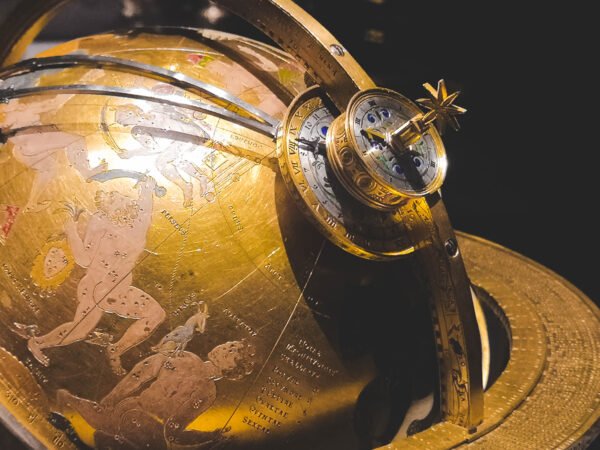
The Kunstkammer is the original Hubsburgs trasury collection. Today, it consists of 2 162 objects. Photo by Alis Monte [CC BY-SA 4.0], via Connecting the Dots

Hall XI. Photo by Alis Monte [CC BY-SA 4.0], via Connecting the Dots
History & Development
The collections predate the museum by centuries. Habsburg rulers began systematic art acquisition in the 16th century, when Archduke Ferdinand II assembled the Kunstkammer at Ambras Castle and Emperor Rudolf II turned Prague into a center for art and curiosities. By the 18th century, the imperial holdings had dispersed across the Hofburg, Schönbrunn, and satellite palaces—impressive but inaccessible to the public and difficult to study systematically.
Emperor Franz Joseph I commissioned the Kunsthistorisches Museum in 1858 as part of Vienna’s Ringstraße development. Architects Gottfried Semper and Karl von Hasenauer designed twin museums—Art History and Natural History—as symmetrical palaces framing Maria-Theresien-Platz. Construction ran from 1871 to 1891; the museum opened on 17 October 1891. The interior decoration enlisted Vienna’s leading artists: Gustav Klimt, his brother Ernst, and Franz Matsch painted allegorical ceiling panels above the grand staircase; Hans Makart contributed designs before his death in 1884.
The 20th century brought disruption and loss. Nazi confiscation during 1938–1945 scattered artworks across occupied Europe; Allied bombing damaged parts of the building. Post-war restitution and reconstruction continued for decades. Major renovations from 2003–2013 modernized infrastructure while preserving the original interiors; the reopened Kunstkammer in 2013 restored public access to a collection closed since the 1990s. Today the KHM operates as a national museum, balancing conservation with accessibility and contextualizing Habsburg collecting within broader discussions of provenance, colonialism, and cultural patrimony.
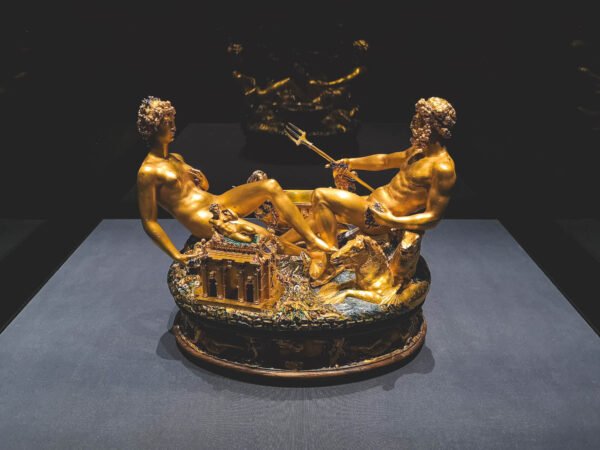
Benvenuto Cellini, Saliera, 1543. Photo by Alis Monte [CC BY-SA 4.0], via Connecting the Dots
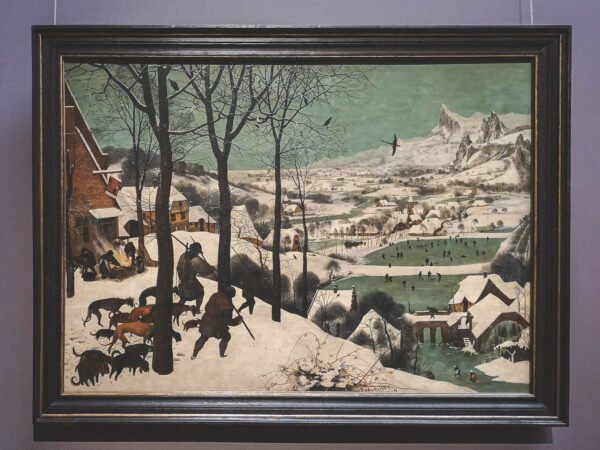
Pieter Bruegel the Elder, The Hunters in the Snow, 1565. Photo by Alis Monte [CC BY-SA 4.0], via Connecting the Dots
Highlights
Bruegel Room. The KHM holds twelve paintings by Pieter Bruegel the Elder—more than any other museum worldwide. “The Tower of Babel” (1563) compresses architectural fantasy into a spiraling ziggurat populated by hundreds of laborers. “Hunters in the Snow” (1565) freezes a Flemish winter in amber: bare trees, frozen ponds, distant mountains borrowed from Alpine crossings. “Peasant Wedding” (1567) and “Peasant Dance” (1568) document village life with ethnographic precision and satirical edge. This room alone justifies the visit.
Vermeer’s “The Art of Painting” (1666–68). Johannes Vermeer’s largest work—a painter at his easel, a model posed as Clio, light streaming through a curtain—is also one of the most analyzed images in Western art. Hitler coveted it personally; it spent the war in an Austrian salt mine before returning to Vienna. The painting rewards slow looking: every surface reflects light differently, every textile has distinct texture, every detail contributes to an allegory of artistic ambition.
Saliera by Benvenuto Cellini (1540–43). The only surviving major goldsmith work by Cellini, originally made for King Francis I of France. Two reclining figures—Sea (Neptune) and Earth (personified as a woman)—frame a salt cellar and pepper container in gold, enamel, and ebony. Stolen in 2003 and recovered in 2006 (buried in a forest near Vienna), it now anchors the Kunstkammer with appropriate security.
Raphael’s “Madonna of the Meadow” (1506). A pyramidal composition of the Virgin, Christ Child, and infant John the Baptist against an Umbrian landscape—textbook High Renaissance harmony. Acquired by Archduke Ferdinand Karl in 1662 and transferred from Ambras Castle to Vienna in 1773, it remains one of the museum’s most photographed works.
Caravaggio Collection. Three paintings including “David with the Head of Goliath” and “Madonna of the Rosary” from the early 1600s—the latter purchased by a consortium of Flemish painters (including Rubens) and later acquired for Vienna. Caravaggio’s chiaroscuro and psychological intensity mark a turning point in Baroque painting.
Egyptian Collection. Around 18,500 objects spanning nearly 5,000 years, including the offering chapel of Ka-ni-nisut (c. 2400 BCE)—one of the best-preserved Old Kingdom tombs outside Egypt. Sarcophagi, mummies, papyri, and devotional objects trace Egyptian belief and daily life from Predynastic times through Roman rule.
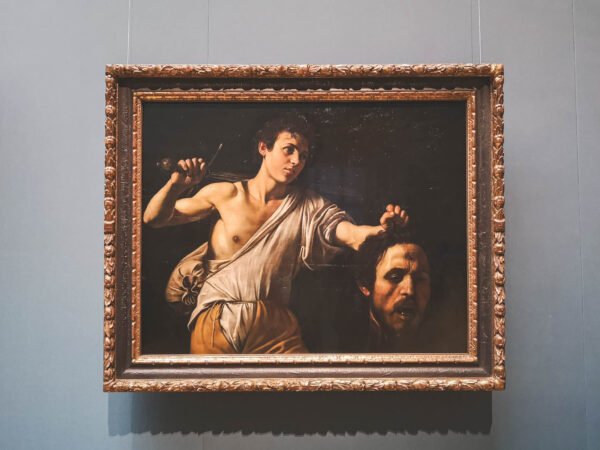
Caravaggio, David with the head of Goliath, 1565. Photo by Alis Monte [CC BY-SA 4.0], via Connecting the Dots
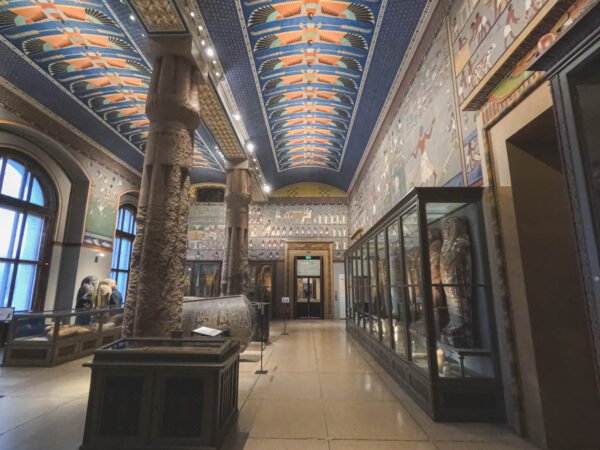
The Egyptian Collection. Photo by Alis Monte [CC BY-SA 4.0], via Connecting the Dots
Why Visit?
The Kunsthistorisches Museum isn’t a survey—it’s a thesis. Habsburg emperors didn’t collect randomly; they acquired systematically to demonstrate dynastic legitimacy, cultural sophistication, and political reach. Standing before Bruegel’s peasant scenes, you’re seeing works that hung in Rudolf II’s Prague, later relocated to Vienna as the empire contracted. The Kunstkammer objects—carved ivories, automata, nautilus shells mounted in silver—embody Renaissance wonder at the natural world and human artifice combined. This museum shows you how power collected, what it valued, and why.
The building amplifies the argument. Klimt’s early paintings above the staircase—before gold, before Secession, before scandal—depict ancient Egypt and Greece as the foundations of European civilization, framing Habsburg culture as heir to classical antiquity. Every decorative detail (columns, caryatids, ceiling frescoes) reinforces this narrative. The architecture isn’t wallpaper; it’s propaganda preserved in marble.
Locals value the Thursday late opening (until 21:00) when crowds thin and the Bruegel room empties enough for contemplation. The museum café beneath the dome serves Viennese standards in one of the city’s most spectacular interiors—worth visiting even without a ticket. Budget 2–3 hours minimum for the Picture Gallery and Kunstkammer; 4–5 hours to add antiquities. Pair with the Natural History Museum across the plaza for a full day on Maria-Theresien-Platz, or combine with the nearby Leopold Museum and MUMOK in the MuseumsQuartier (10-minute walk) for contrast between imperial and modern collecting.
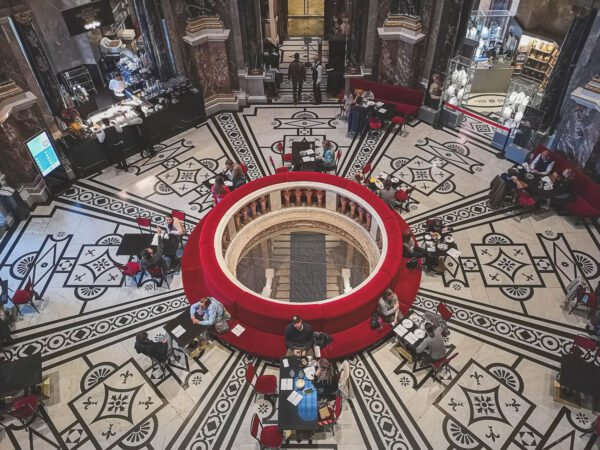
The Museum Cafe under dome. Photo by Alis Monte [CC BY-SA 4.0], via Connecting the Dots

Giuseppe Arcimboldo, Summer, 1563 (left) and The allegory of Fire, 1566 (right). Photo by Alis Monte [CC BY-SA 4.0], via Connecting the Dots
All content and photos by Alis Monte, unless stated differently. If you want to collaborate, contact me on info@ctdots.eu Photo by Alis Monte [CC BY-SA 4.0], via Connecting the Dots
Ticket Discounts
Visit the Kunsthistorisches Museum for less with Vienna’s top city passes. The Vienna Pass gives free access to the Kunsthistorisches Museum and 70+ attractions citywide, plus skip-the-line entry. For flexible transport and discounted tickets to major sights, get the Vienna City Card (24h–72h) with unlimited public transport and museum savings. Both passes include free cancellation up to 24h before activation.
Frequently Asked Questions
Where is the Art History Museum in Vienna?
On Maria-Theresien-Platz in Vienna's 1st district, directly opposite the Natural History Museum and adjacent to the Hofburg complex.
When was it built?
Construction ran from 1871 to 1891; the museum opened to the public on 17 October 1891.
What are the opening hours?
Monday–Sunday 10:00–18:00; Thursday 10:00–21:00 (as of December 2025; check the official site for holiday hours).
What should I not miss?
The Bruegel Room (twelve paintings), Vermeer's "The Art of Painting," Cellini's Saliera in the Kunstkammer, Raphael's "Madonna of the Meadow," and the Caravaggio collection.
Is it accessible?
Yes—step-free access via side entrance (Burgring 5), lifts to all exhibition floors, wheelchairs available free upon reservation, accessible restrooms.
How long do I need?
Allow 2–3 hours for Picture Gallery and Kunstkammer highlights; 4–5 hours to explore all collections including antiquities.
Which public transport is best?
U2 or U3 to Volkstheater, then 5-minute walk; or tram 1, 2, D, 71 to Burgring stop.
Can I buy tickets online?
Yes—advance tickets available on the official website and via GetYourGuide; skip-the-line entry recommended for weekends and holidays.