September 10, 2026
Natural History Museum Vienna: Imperial Collections & World-Class Exhibits
Architecture, Art, Culture, History
This page contains links through which we may earn a small commission should you decide to book a tour from our partner.
Top attractions:
About Natural History Museum Vienna
The Natural History Museum Vienna (Naturhistorisches Museum Wien) is one of Europe’s great natural history collections, set inside a grand Renaissance Revival building on Maria-Theresien-Platz in Vienna’s 1st district. It opened in 1889 to showcase the Habsburgs’ vast scientific holdings—and it still feels like a palace built for curiosity.
Inside, you’ll find more than 30 million objects spread across 39 galleries, covering everything from mineralogy and geology to paleontology, prehistory, and zoology. Highlights range from the famous 29,500-year-old Venus of Willendorf to one of the world’s largest public meteorite displays. And because the museum sits directly opposite its “twin” across the square, it’s easy to pair your visit with the Art History Museum Vienna for a full day on Maria-Theresien-Platz.
On weekends and during peak season, ticket lines can get long—so if you’re short on time, buying your ticket online is the easiest way to skip the queue.
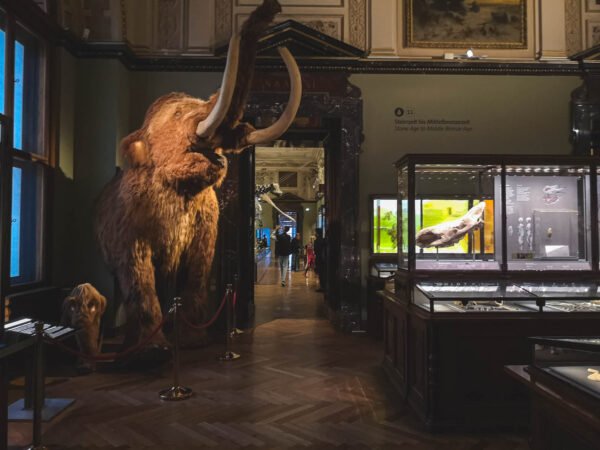
Mammoths in the Stone Age Hall. Photo by Alis Monte [CC BY-SA 4.0], via Connecting Vienna
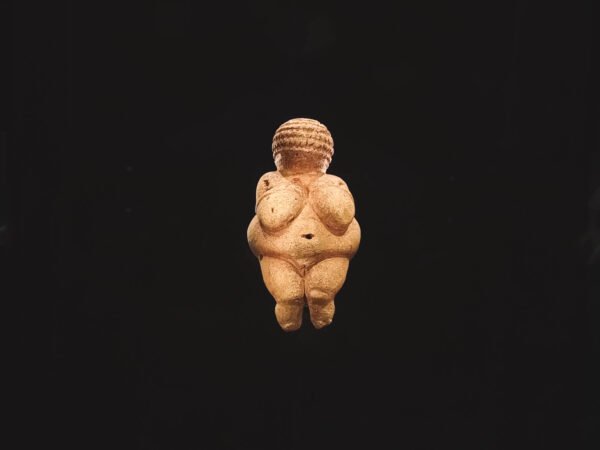
Venus of Willendorf. Photo by Alis Monte [CC BY-SA 4.0], via Connecting Vienna
Natural History Museum Vienna Details
- Location: Innere Stadt (1st district)
- Region: Vienna, Austria
- Address: Maria-Theresien-Platz, 1010
- Entrance: Main entrance on Maria-Theresien-Platz
- Opened: 1889 (19th century)
- Architectural Style: Renaissance Revival
- Entrance fee: €18 adults; €14 reduced; free under 19; annual pass €44; Vienna Pass free entry
- Tickets: Official shop and trusted partners (online recommended for weekends)
- Opening hours: Thu–Mon 09:00–18:00; Wed 09:00–20:00; closed Tue; last entry 30 minutes before closing
- Phone: +43 1 52177
- Transport: U2/U3 Volkstheater; tram 1, 2, 46, 49, 71, D (Burgring / Ring); bus 48A
- Accessibility: Lifts to exhibition floors (visitor lift in the first courtyard); prams via the main Maria-Theresien-Platz entrance; accessible restrooms; wheelchair loan
Location
Current Exhibitions
- Good Collecting – Bad Collecting (150 years of the NHM) — until 27 June 2027 (1st floor special halls)
- Glaciers out of balance — until 10 January 2027 (hallway, Level 1)
- Cockaigne. Future Land of Milk and Honey? — until 14 September 2026 (Hall 21)
Bird halls 29–32 are closed for reconstruction. The habitats of birds reopen from 30 September 2026.
Permanent / family halls
- Ice Age Children and their World — children’s hall (from 21 May 2025)
- Toes, tails & tiny trails — amphibians and reptiles (from 30 April 2025)
Narrenturm (separate building; combo ticket €22)
- Caution, high voltage! — until 24 April 2027
- The art of the moulage — permanent (from 8 October 2025)
Coming next: GENchangers — 14 October 2026 – 26 July 2027 (Hall 21).
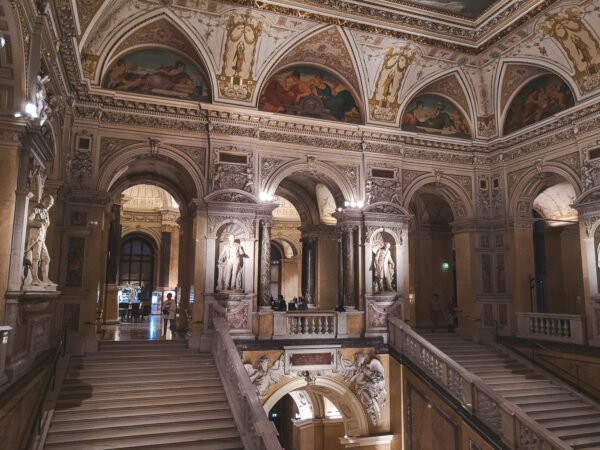
NHM interior staircase. Photo by Alis Monte [CC BY-SA 4.0], via Connecting Vienna
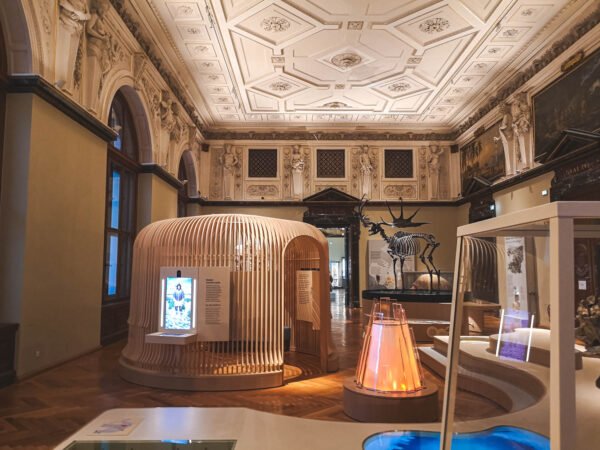
Hall 16 (Ice Age children and their world). Photo by Alis Monte [CC BY-SA 4.0], via Connecting Vienna
History & Development
The museum’s roots reach back to Emperor Franz I Stephan’s 18th-century cabinet of curiosities, later expanded by his successors into one of Europe’s premier natural history collections. By the mid-19th century, the holdings had outgrown the Hofburg; Emperor Franz Joseph I commissioned a purpose-built museum on the Ringstraße.
Designed by Gottfried Semper and Karl von Hasenauer, the twin museums—Natural History and Art History—were conceived as symmetrical Renaissance Revival palaces framing Maria-Theresien-Platz. Construction ran from 1871 to 1889; the Natural History Museum opened to the public on 10 August 1889. The interior followed a rational typological system: minerals and fossils on the ground floor, prehistoric and anthropological collections on the mezzanine, zoological specimens above.
Across the 20th century, the museum evolved from an imperial display case into a research institution. Post-1945 modernizations added new exhibition techniques while preserving the original architecture. In 2005 a full-dome digital planetarium opened on the roof, and ongoing renovations have refreshed halls with interactive displays, DNA labs, and augmented reality experiences—maintaining the core mission of public education and cutting-edge science.
Highlights
Venus of Willendorf. A limestone figurine carved around 29,500 years ago, discovered in Willendorf (Wachau Valley), Lower Austria in 1908. This 11 cm / 4.3 inch icon of Paleolithic art anchors Hall 11’s prehistory collection.
Meteorite Hall (Hall 5). The world’s largest and oldest public meteorite display, featuring the 247 kg / 545 lb Hraschina iron meteorite (fell 1751) and fragments from Mars, the Moon, and asteroid Vesta.
Dinosaur Hall (Hall 10). Life-size skeletons including Allosaurus, Iguanodon, and a cast of Diplodocus carnegii. The reconstructed Plateosaurus from Trossingen, Germany, remains a visitor favorite.
Roof Tour & Planetarium. Guided tours access the rooftop for panoramic views over the Ringstraße; the 8.5 m / 28 ft planetarium dome offers full-dome astronomy and nature films (separate ticket required).
Hall 39: Zoology. Historical taxidermy displays include extinct species—Steller’s sea cow, quagga, and passenger pigeon—preserved from the imperial collections, presented in original 19th-century cabinets.
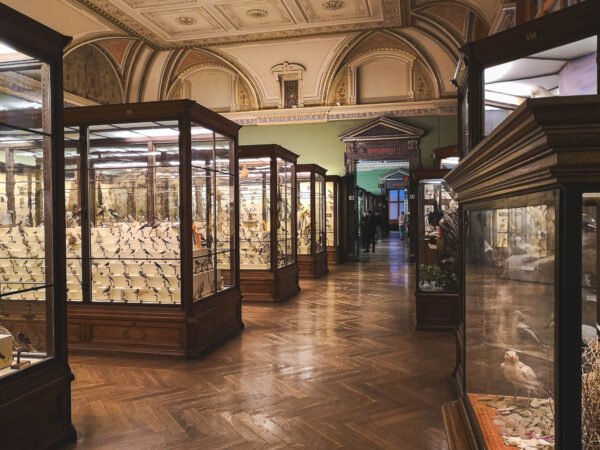
Halls 29-32 Bird Collection. Photo by Alis Monte [CC BY-SA 4.0]
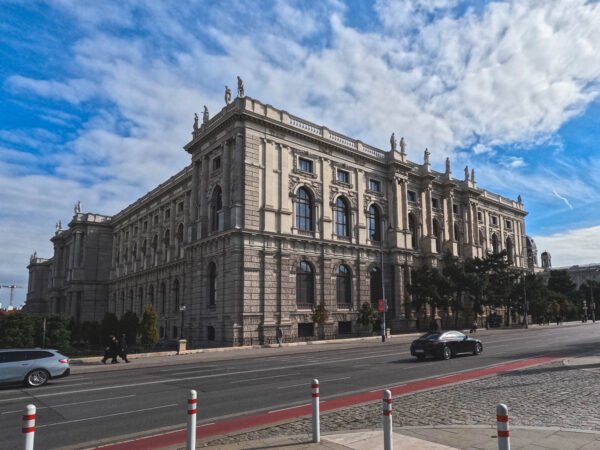
NHM from Museumstrasse. Photo by Alis Monte [CC BY-SA 4.0], via Connecting Vienna
Bird halls: Halls 29–32 are closed while the bird habitats are rebuilt. Plan dinos, Venus, meteorites, minerals, Ice Age kids, and Hall 39 first — then come back after 30 September 2026 for the refreshed bird rooms.
Why Visit?
The Natural History Museum delivers something most modern science centers can’t: a direct line to 250 years of continuous collecting, research, and display. You stand before the actual Venus of Willendorf—not a replica—in a hall designed when Darwin’s ideas were still new. The meteorite collection predates spaceflight; the dinosaur skeletons were mounted when paleontology was defining itself. This isn’t nostalgia—it’s seeing how scientific knowledge accumulates, layer by layer.
The building itself rewards attention. The architects embedded natural history into the design: ceiling frescoes trace evolutionary thinking, marble columns showcase geological specimens, and the grand staircase places you within a typological system that reflects 19th-century Enlightenment ideals. Recent interventions—QR codes, interactive screens, DNA extraction demos—complement the original vitrines without altering them.
Maria-Theresien-Platz twin day
NHM faces the Kunsthistorisches Museum across Maria-Theresien-Platz — science palace opposite art palace. They are separate tickets. A calm local rhythm: NHM in the morning while kids still have energy, square break, then KHM — or reverse if you are art-first. Vienna Pass holders get free NHM entry on the official tariff; still reserve or buy ahead on busy weekends.
Family route
Under 19 is free. If attention runs short: Dinosaur Hall 10 → Ice Age Children hall → amphibians/reptiles → Meteorite Hall 5. Wednesday late opening (until 20:00) is kinder for after-school visits. The Narrenturm pathology collection is a separate adult curiosity — not the default family add-on. The NHM museum shop has some of the friendliest prices among Vienna’s major museums, with lots of interesting stuff kids love.
Locals value the Wednesday late opening (until 20:00) for quieter exploration, and the rooftop tours (bookable online) offer insider access beyond the public halls. Families find the dinosaur hall and hands-on “Micro Show” engaging for children, while researchers appreciate active research collections—many objects are still studied, not merely exhibited. Budget 2–3 hours for highlights, or a full afternoon to work systematically through all 39 halls. I love to spend a whole day here, it is the Hard Science museum after all.
Tickets without the weekend queue
Buy timed entry for the Natural History Museum, then decide whether the same square needs the Kunsthistorisches too — or grab a Vienna PASS if you are stacking several paid sights.
- Natural History Museum Vienna ticket
- Kunsthistorisches Museum entrance — same square, separate visit
- Vienna PASS — includes free NHM among many sights
Useful Links
Official
- NHM Vienna information (hours & tickets) (EN)
- NHM ticket shop (EN)
- Exhibitions (EN)
- Barrier-free access (EN)
- Bird habitats reopen (DE)
Tours & passes (partner)
Frequently Asked Questions
Where is the Natural History Museum Vienna?
On Maria-Theresien-Platz in Vienna's 1st district, directly opposite the Kunsthistorisches Museum.
When was it built?
Construction ran from 1871 to 1889; the museum opened to the public on 10 August 1889.
What are the opening hours?
Thursday–Monday 09:00–18:00; Wednesday 09:00–20:00; closed Tuesday. Last entrance 30 minutes before closing.
What should I not miss?
Venus of Willendorf (Hall 11), Meteorite Hall (Hall 5), Dinosaur Hall (Hall 10), and the rooftop planetarium.
Is it accessible?
Yes — lifts serve the exhibition floors (including the visitor lift in the first courtyard), with accessible restrooms and wheelchair loan. Prams use the main Maria-Theresien-Platz entrance.
How long do I need?
Allow 2–3 hours for highlights; 4–5 hours to explore all 39 halls thoroughly.
Which public transport is best?
U2 or U3 to Volkstheater (about a 5-minute walk); tram 1, 2, 46, 49, 71, or D to Burgring / Ring stops; bus 48A.
Can I buy tickets online?
Yes — use the official NHM shop or a trusted partner for skip-the-line entry on weekends and school holidays. Under 19 free; Vienna Pass holders enter free on the official tariff.
Are the bird halls open?
Halls 29–32 are closed for reconstruction. Bird habitats reopen from 30 September 2026.
